
As electric vehicles (EVs) continue to gain popularity worldwide, the demand for home charging solutions has skyrocketed. Wallbox chargers, also known as Level 2 EV chargers, have become the preferred choice for residential installations due to their faster charging speeds and convenience. However, the installation process is far from straightforward, and numerous mistakes can compromise safety, efficiency, and functionality. Understanding these common errors, their underlying causes, and appropriate solutions is crucial for ensuring a successful wallbox installation.
1. Inadequate Electrical Infrastructure Assessment
One of the most fundamental mistakes in wallbox installation is failing to properly assess the existing electrical infrastructure before beginning the project. Many homeowners and even some inexperienced installers underestimate the power requirements of modern EV chargers, which typically draw between 30 to 50 amps of current.
Common Issues: The primary problem stems from outdated electrical panels that cannot accommodate the additional load of a wallbox charger. Older homes, particularly those built before the 1990s, often have 100-amp or even 60-amp main service panels, which may already be operating near capacity. Installing a high-powered wallbox without upgrading the panel can lead to frequent circuit breaker trips, overheating, and potentially dangerous electrical fires.
Root Causes: This mistake typically occurs due to a lack of thorough pre-installation evaluation. Installers or homeowners may rush into the installation without consulting with a qualified electrician to perform a load calculation. Additionally, there's often a desire to minimize costs by avoiding panel upgrades, leading to shortcuts that compromise safety.
Solutions: Before any wallbox installation, a comprehensive electrical load analysis should be conducted by a licensed electrician. This assessment should evaluate the home's total electrical demand, including all major appliances, HVAC systems, and the proposed EV charger. If the existing panel is insufficient, upgrading to a 200-amp service should be prioritized. Some homeowners may also benefit from load management systems that intelligently distribute power between the wallbox and other household circuits, preventing overload situations.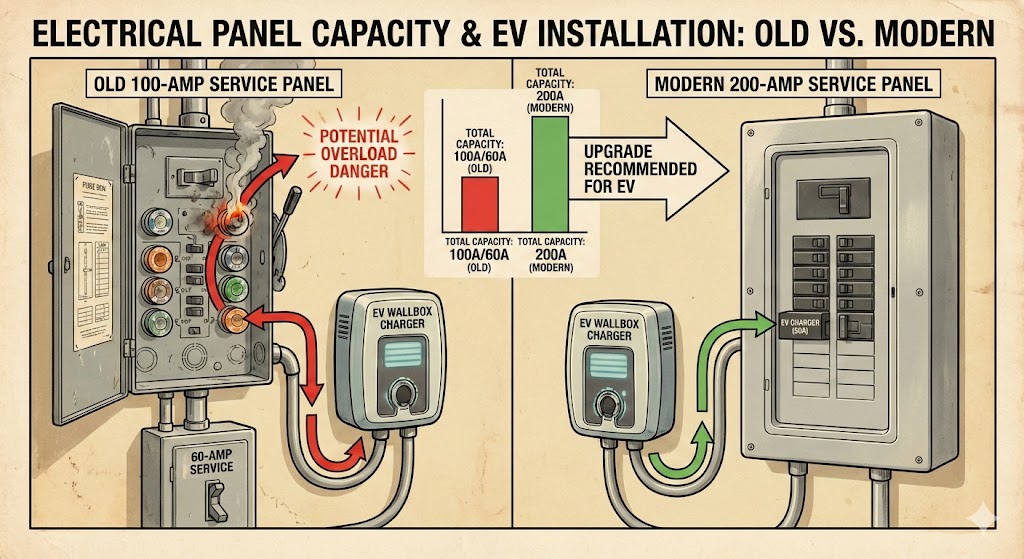
2. Incorrect Circuit Breaker Sizing
Circuit breaker selection is a critical aspect of wallbox installation that is frequently mishandled. The breaker must be appropriately sized to protect the circuit while allowing the charger to operate at its full capacity.
Common Issues: Installing a circuit breaker that is either too small or too large creates significant problems. An undersized breaker will trip frequently during normal charging operations, causing inconvenience and potentially damaging the charger's electronics through repeated power interruptions. Conversely, an oversized breaker fails to provide adequate protection, potentially allowing dangerous overcurrent conditions that can damage wiring or create fire hazards.
Root Causes: This error often results from misunderstanding the National Electrical Code (NEC) requirements, which stipulate that continuous loads (like EV chargers) should not exceed 80% of the circuit breaker's rating. For example, a 40-amp wallbox requires a 50-amp breaker, not a 40-amp one. Some installers, particularly those without specialized EV charging experience, may not be familiar with this crucial distinction.
Solutions: Always follow the manufacturer's specifications and NEC guidelines when selecting circuit breakers. For a typical 40-amp wallbox, install a 50-amp circuit breaker with appropriate 6-gauge wire. Consult the wallbox manual and work with certified electricians who have specific experience with EV charging installations. Double-check all calculations before finalizing the installation.-35.jpg?w=1024&h=559)
3. Improper Wire Gauge Selection
Using incorrect wire gauge is a serious mistake that can lead to voltage drop, overheating, and fire hazards. The wire must be thick enough to safely carry the current required by the wallbox over the entire distance from the electrical panel to the installation location.
Common Issues: Undersized wiring is the most dangerous error in this category. When wire gauge is too thin for the amperage and distance, resistance increases, causing the wire to overheat. This not only reduces charging efficiency due to voltage drop but also creates a significant fire risk. Over time, excessive heat can degrade wire insulation, increasing the likelihood of short circuits.
Root Causes: This mistake often occurs when installers try to save money on materials or fail to account for the total circuit length. Some may not understand that longer distances require thicker wire to compensate for resistance. Additionally, using leftover wire from other projects without verifying its suitability is a common shortcut that leads to problems.
Solutions: Wire gauge selection must consider both the amperage and the total distance from the panel to the wallbox. For a 40-amp circuit, 8-gauge wire is typically sufficient for runs up to 50 feet, but 6-gauge wire should be used for longer distances. Always consult NEC tables or use wire gauge calculators that account for both current and length. Never compromise on wire quality or size to save costs.
4. Poor Location Selection
The physical placement of the wallbox is frequently overlooked, yet it significantly impacts usability, safety, and longevity of the installation.
Common Issues: Installing wallboxes in locations exposed to direct weather elements, excessive moisture, or extreme temperatures reduces their lifespan and can create safety hazards. Placing the unit too far from where the vehicle parks results in cable management issues and inconvenience. Installing at incorrect heights makes the charger difficult to access or increases the risk of damage from vehicle impacts.
Root Causes: Poor location choices often stem from prioritizing convenience during installation over long-term usability. Installers may choose the shortest route from the electrical panel to minimize wiring costs, without considering whether that location is optimal for daily use. Lack of familiarity with the homeowner's parking patterns and vehicle charging port locations also contributes to suboptimal placement.
Solutions: Conduct a thorough site survey before installation. The ideal location should be close to where the vehicle regularly parks, protected from direct weather exposure (or use a properly rated outdoor-certified unit), and mounted at an ergonomic height (typically 4 to 5 feet from ground level). Consider installing the wallbox in a garage or under an overhang for weather protection. Ensure adequate clearance around the unit for ventilation and maintenance access.
5. Inadequate Grounding and Bonding
Proper grounding and bonding are essential safety features that are sometimes neglected or improperly executed during wallbox installation.
Common Issues: Insufficient or missing ground connections create serious shock hazards. Without proper grounding, fault currents have no safe path to earth, potentially energizing the wallbox enclosure and creating deadly conditions. Poor bonding between metal components can lead to potential differences that cause arcing or shocking hazards.
Root Causes: This mistake typically results from lack of knowledge about electrical safety principles or taking shortcuts to save time. Some installers may assume that existing building ground systems are adequate without verifying their integrity. In older homes, ground systems may be corroded or disconnected, requiring updates that inexperienced installers might miss.
Solutions: Always install a dedicated ground wire from the wallbox to the electrical panel ground bus. Verify ground continuity using appropriate testing equipment. Ensure all metal enclosures, conduits, and mounting hardware are properly bonded. In some cases, installing a supplemental grounding electrode system may be necessary, particularly in older homes or areas with poor soil conductivity.
6. Neglecting Permit and Inspection Requirements
Perhaps one of the most consequential mistakes is proceeding with installation without obtaining proper permits or scheduling required inspections.
Common Issues: Unpermitted work can result in fines, insurance complications, and liability issues. More importantly, bypassing the inspection process means potentially dangerous installation errors go undetected. When selling a home, unpermitted electrical work can derail transactions or require costly corrections.
Root Causes: Homeowners may skip permits to avoid fees or expedite the installation process. Some may be unaware that EV charger installation requires permits in most jurisdictions. DIY enthusiasts might believe they can do the work themselves without professional oversight, not realizing the legal and safety implications.
Solutions: Always check local building codes and obtain necessary permits before beginning installation. Work with licensed electricians who are familiar with permitting processes. Schedule inspections at appropriate stages of the installation. While this may add time and cost upfront, it ensures compliance, safety, and protects property value.
7. Ignoring Load Management and Smart Charging Features
Modern electrical systems in homes are increasingly complex, and failure to implement load management can lead to efficiency problems and electrical system stress.
Common Issues: Without load management, simultaneous operation of multiple high-draw appliances (dryer, oven, HVAC, and EV charger) can overload the electrical system. This results in nuisance tripping, reduced charging speeds, or strain on the electrical infrastructure.
Root Causes: Many installers and homeowners are unaware of available load management technologies or believe they're unnecessary expenses. There's also a tendency to focus solely on getting the charger operational without considering integration with the broader home electrical system.
Solutions: Consider installing smart wallboxes with built-in load management features or dedicated energy management systems. These devices can monitor household electrical consumption and automatically adjust charging rates to prevent overloads. Some systems can communicate with utility companies to take advantage of time-of-use rates, reducing electricity costs while supporting grid stability.
Conclusion
Wallbox installation mistakes can range from minor inconveniences to serious safety hazards. The common thread among most errors is inadequate planning, lack of expertise, or attempts to cut costs in ways that compromise quality and safety. By understanding these common mistakes and their solutions, homeowners and installers can ensure that EV charging systems are installed correctly the first time.
The key to successful wallbox installation lies in thorough preparation, working with qualified professionals, following all relevant codes and regulations, and never compromising on safety for convenience or cost savings. As electric vehicles become increasingly common, professional installation standards will continue to evolve, making ongoing education and adherence to best practices more important than ever. A properly installed wallbox not only provides reliable, efficient charging but also protects your home, your vehicle, and most importantly, your family's safety.