
What Is Smart Charging?
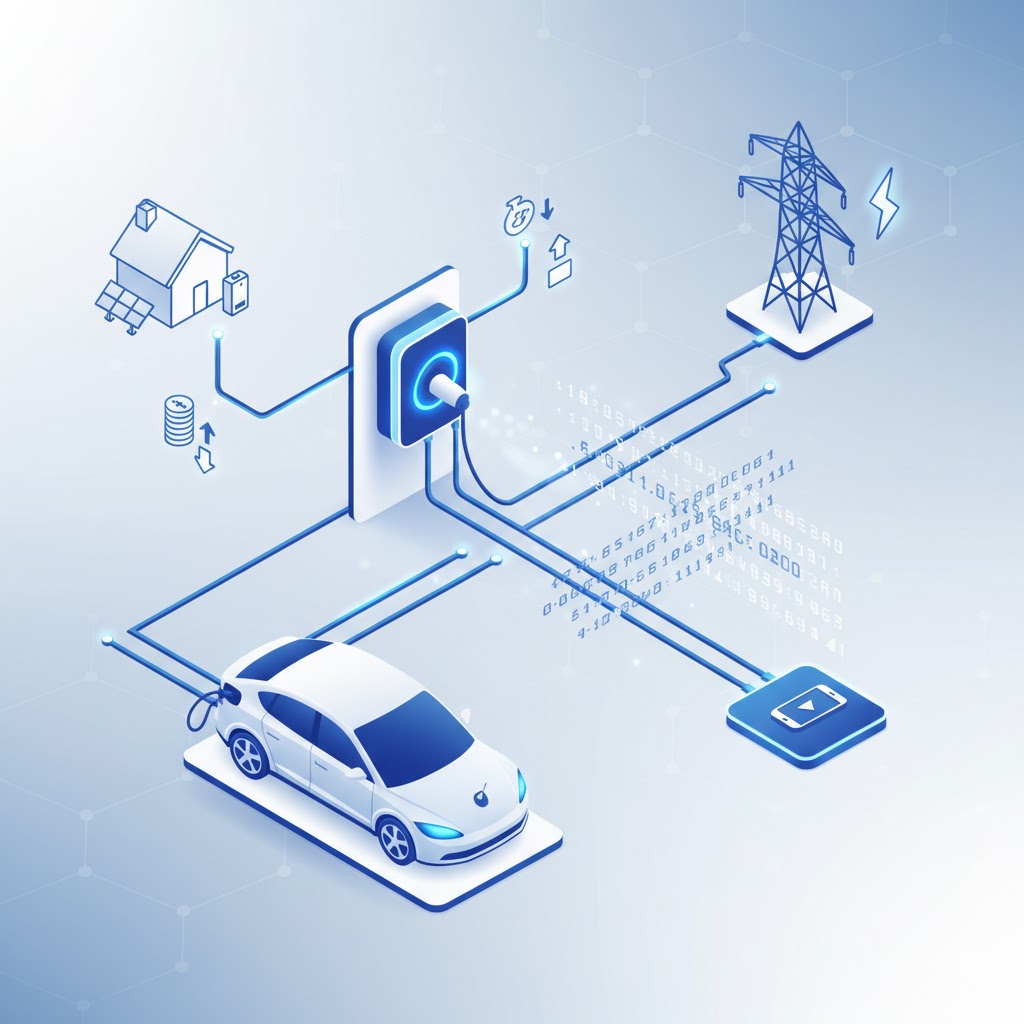
In today’s era of electric mobility, charging an EV is no longer as simple as plugging it in and waiting for the battery to fill. Smart charging technology is quietly transforming the experience for millions of EV owners. In essence, it’s a complete ecosystem where electric vehicles, charging stations, and power grids communicate with one another. Through data sharing and real-time decision-making, the entire charging process becomes more efficient, flexible, and intelligent.
The core idea behind smart charging is to move away from the old, passive model of charging. Drivers no longer need to constantly monitor their battery levels, nor do chargers merely supply electricity on demand. Instead, charging becomes a coordinated, proactive, and optimized process. According to recent studies, smart charging can reduce grid peak loads by 10–15%, making the overall energy infrastructure stronger and more efficient.
How Smart Charging Works
What makes smart charging truly “smart” is its ability to communicate and make decisions in real time. When you plug your EV into a smart charger, the system instantly analyzes multiple data points: current grid demand, real-time electricity pricing, your usage habits, battery health, and even weather forecasts.
A key feature of this system is dynamic pricing. Unlike traditional flat electricity rates, dynamic pricing allows utilities to adjust costs throughout the day based on demand. During off-peak hours—say, late at night—electricity might cost 30–50% less than during the day. Smart chargers automatically take advantage of these fluctuations, scheduling charging sessions during the cheapest periods. The result: lower bills with zero effort from the driver.
Another essential feature is demand-response management. When the grid experiences high demand, smart chargers can temporarily lower charging power or pause charging entirely to help stabilize the system. Though it sounds simple, this collective adjustment can significantly reduce strain on the grid and minimize the risk of blackouts during energy shortages.
Remote monitoring and control bring added convenience. With Wi-Fi connectivity and mobile apps, users can check charging status, power usage, and remaining time from anywhere. You can start or stop charging remotely, or even preset schedules—such as beginning a charge automatically at 2 a.m. and finishing right before you leave for work.
Key Features of Smart Charging
Adjustable charging current is one of the most practical features. Unlike conventional chargers that supply a fixed current, smart chargers let you set the output anywhere between 8 A and 32 A. This adaptability matters—for example, if you’re using an older home circuit or charging at a friend’s house, the charger can automatically adjust to ensure safe and stable operation.
Delayed charging is another useful option, especially for those who want to take advantage of cheaper nighttime rates. Many smart chargers allow you to delay charging by 1–9 hours. You can plug in your car in the evening and let the system start automatically after midnight. Over time, these small optimizations can save hundreds of dollars per year.
Multi-protocol compatibility reflects the industry’s growing inclusiveness. With multiple charging standards worldwide—Type 1 in North America, Type 2 in Europe, GB/T in China, and Tesla’s proprietary connector—modern smart chargers often support them all. That means one device can work seamlessly with nearly any EV brand.
Built-In Safety and Protection
Electric safety is paramount, and modern smart chargers are equipped with multiple layers of protection. Over-current protection instantly shuts off power when abnormal current is detected, preventing fires and damage. Over-voltage and under-voltage protection ensure a stable power supply, while leakage protection detects stray current to prevent electric shock. Advanced thermal management systems use heat-resistant materials and temperature sensors to keep the charger safe even in extreme conditions—from -30 °C winters to +55 °C summers.
These safety measures aren’t just passive defenses. Embedded smart chips monitor and analyze real-time charging data—voltage, current, duration, power consumption—and react immediately to any irregularities. The outer casing, often made from industrial-grade aluminum alloy, can withstand the weight of a vehicle and typically meets IP55–IP66 waterproof ratings for outdoor use.
How Smart Charging Enhances Everyday Life
For everyday commuters, smart charging means convenience and efficiency. Suppose you drive 50 km a day. Over time, your smart charger learns your schedule and predicts when you’ll need a full battery. It can automatically plan the most efficient charging strategy—whether to charge immediately after work for a weekend trip, or wait until the off-peak hours to save money and finish just before your morning commute.
For homeowners with solar panels, smart charging opens up even more possibilities. Your EV can charge directly using clean solar power, reducing both costs and your carbon footprint. Some users report that, thanks to smart integration with home solar systems, their EV charging costs have become almost negligible.
For fleet operators, such as delivery or taxi services, the benefits multiply. Smart scheduling and coordinated charging can dramatically cut operating expenses while keeping more vehicles on the road.
What Drivers Can Expect Next
As of 2025, several exciting trends are reshaping the EV charging landscape. One major development is the rise of ultra-fast charging. With chargers delivering up to 350 kW, batteries can reach 80% capacity in just 20 minutes—comparable to the time it takes to refuel a gasoline car. As these chargers become more common, range anxiety is rapidly fading.
Another breakthrough is bidirectional charging, also known as Vehicle-to-Grid (V2G). This technology allows your EV not only to draw power from the grid but also to send electricity back when needed. In the future, EVs could function as mobile batteries that support the grid during peak demand—earning you credits or payments in the process.
Meanwhile, costs continue to fall. Thanks to mass production and technological progress, both EVs and smart chargers are becoming more affordable each year, opening the door for wider adoption across households and businesses.
(1).jpg?w=1024&h=940)
Looking Ahead
Smart charging is now transitioning from early adoption to mainstream deployment. The spread of 5G networks will make real-time communication between vehicles and the grid faster and more reliable, while artificial intelligence will refine charging decisions to match each driver’s habits and preferences.
Ultimately, this evolution points toward a fully connected energy ecosystem—one where EVs, charging systems, home energy networks, solar panels, and the power grid operate in seamless harmony. Such integration will optimize energy use across society, reduce costs and emissions, and make daily life more convenient.
Smart charging isn’t some distant futuristic dream—it’s an innovation already reshaping how we move, live, and interact with energy. Whether you’re thinking about buying your first EV or already enjoying the benefits of a smart charger, this technology promises an even smarter, cleaner, and more efficient driving future.