
Tesla's Supercharger network represents one of the most sophisticated electric vehicle charging infrastructures in the world. With thousands of stations across multiple continents, the company has developed an intricate system to track and manage charger availability in real-time. This technological achievement not only enhances the user experience but also optimizes network efficiency and reliability. Understanding how Tesla accomplishes this feat reveals a complex interplay of hardware, software, data analytics, and user interface design.
The Foundation: Real-Time Data Collection
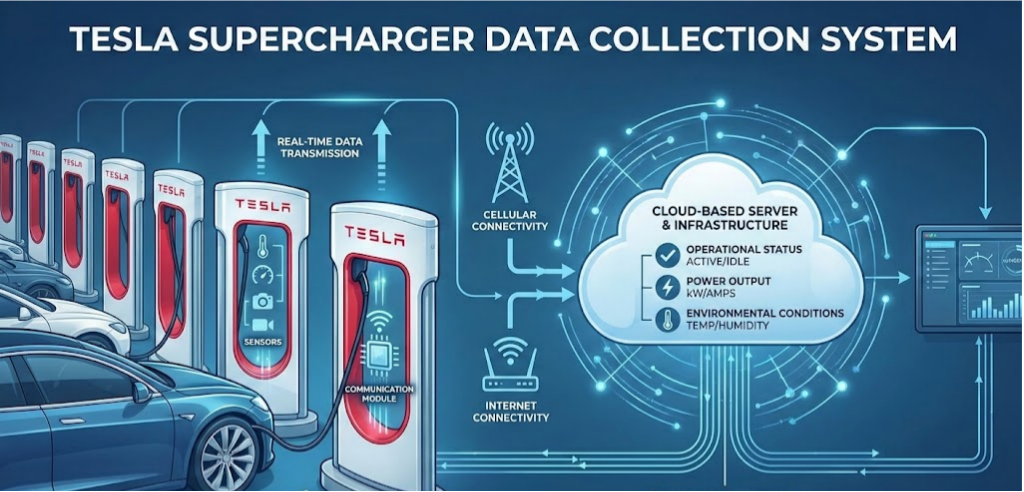
At the heart of Tesla's Supercharger management system lies a comprehensive real-time data collection infrastructure. Each Supercharger stall is equipped with sensors and communication modules that constantly transmit information back to Tesla's central servers. This data includes the operational status of each charging unit, whether it's currently in use, experiencing technical issues, or available for immediate use.
The communication happens through a combination of cellular and internet connectivity. Each Supercharger station maintains a constant connection to Tesla's cloud infrastructure, ensuring that status updates occur within seconds of any change. When a Tesla vehicle plugs into a Supercharger, the system immediately registers this event and updates the availability status. Similarly, when a vehicle completes charging and disconnects, the stall's status reverts to available almost instantaneously.
This granular level of monitoring extends beyond simple occupied or vacant status indicators. The system also tracks the charging rate, power output, any error codes or malfunctions, ambient temperature conditions, and even predictive maintenance indicators. This comprehensive data collection enables Tesla to not only inform drivers about current availability but also to anticipate and prevent potential issues before they impact users.
Integration with Tesla's Navigation System
Tesla has seamlessly integrated Supercharger availability information directly into its vehicle navigation system. When a Tesla driver plans a long-distance trip using the built-in navigation, the system automatically calculates optimal charging stops based on the vehicle's current battery level, projected energy consumption, and real-time Supercharger availability.
The navigation system displays the number of available stalls at each Supercharger location along the planned route. This information updates dynamically as the vehicle approaches the charging station, accounting for other vehicles that may arrive before the driver or those that complete charging and depart. The system uses predictive algorithms that consider historical usage patterns, time of day, day of the week, and even seasonal variations to estimate how busy a particular station might be upon the driver's arrival.
Furthermore, the navigation system provides intelligent rerouting suggestions. If a planned Supercharger stop shows high congestion, the system may recommend an alternative location with better availability, even if it requires a slight detour. This dynamic routing optimization helps distribute charging load across the network and minimizes wait times for all users.
-36.jpg?w=1024&h=501)
The Mobile App Experience
Tesla's mobile application serves as another critical touchpoint for Supercharger availability information. Through the app, Tesla owners can view all nearby Supercharger locations, see the total number of stalls at each site, and check how many are currently available. The app displays this information using intuitive visual indicators, typically showing available stalls in green and occupied ones in gray.
The mobile app also provides additional contextual information that helps drivers make informed decisions. Users can see amenities near each Supercharger location, such as restaurants, restrooms, shopping centers, or hotels. This allows drivers to plan their charging stops around other activities, making the charging experience more convenient and productive.
Recent updates to the mobile app have added even more sophisticated features. Users can now see not just the current availability but also predicted availability at their estimated time of arrival. This predictive capability uses machine learning algorithms trained on vast amounts of historical data to forecast charging patterns with remarkable accuracy.
Cloud-Based Architecture and Data Processing
The backend infrastructure supporting Tesla's Supercharger tracking system operates on a robust cloud-based architecture. Tesla processes millions of data points every day from its global network of Superchargers. This data flows into centralized servers where it undergoes real-time analysis and distribution back to vehicles and mobile apps.
The cloud infrastructure employs sophisticated load balancing to ensure system reliability even during peak usage periods. Redundant systems and failover mechanisms guarantee that availability information remains accessible even if certain servers experience issues. This high-availability architecture is crucial for maintaining user trust and ensuring the charging network functions as a reliable alternative to traditional gas stations.
Tesla's data processing systems also employ advanced analytics to identify patterns and anomalies. If a particular Supercharger stall experiences unusual behavior or frequent disconnections, the system can flag it for maintenance investigation. This proactive approach to system health monitoring helps maintain high network reliability and minimizes the impact of equipment failures on users.
Predictive Analytics and Machine Learning
One of the most impressive aspects of Tesla's Supercharger management system is its use of predictive analytics and machine learning. The company has accumulated years of charging data, creating a rich dataset that enables sophisticated predictive modeling. These models can forecast charging demand at specific locations with surprising accuracy, considering variables such as time, weather conditions, holidays, local events, and traffic patterns.
For example, the system might recognize that a particular Supercharger location along a popular holiday travel route experiences significantly higher demand during Thanksgiving weekend. Armed with this knowledge, the navigation system can proactively suggest alternative charging locations to drivers traveling during these peak periods, helping to prevent congestion before it occurs.
Machine learning algorithms also optimize the charging recommendations provided to drivers. The system learns from aggregate user behavior to understand which amenities drivers prefer at charging stops, how long they typically spend charging, and what factors influence their choice between multiple nearby Supercharger options. This collective intelligence helps improve the overall efficiency of the network.
User Notifications and Communication
Tesla employs a multi-channel approach to keep users informed about Supercharger availability and any issues that might affect their charging experience. In-vehicle notifications appear on the central touchscreen when a driver approaches a Supercharger location, providing up-to-date availability information and any relevant alerts.
Push notifications through the mobile app alert users to important changes. For instance, if a driver is en route to a Supercharger that suddenly experiences a service disruption, they receive an immediate notification suggesting alternative locations. Similarly, during software updates or planned maintenance that might temporarily reduce capacity at a station, Tesla communicates this information to users who might be affected.
The company also maintains a service status page where users can check the operational status of Supercharger locations. This transparency helps build user confidence and allows drivers to plan their trips with accurate information about the charging infrastructure they'll encounter.
Managing High-Demand Situations
Tesla has developed several strategies to manage high-demand situations at popular Supercharger locations. The idle fee system represents one such approach. When a Supercharger location reaches capacity, users who remain plugged in after their charging session completes incur per-minute fees. This economic incentive encourages drivers to move their vehicles promptly after charging, improving turnover and availability for waiting customers.
The navigation system plays a crucial role in demand management by distributing traffic across the network. When multiple Supercharger stations exist within a reasonable distance, the system may recommend the less crowded option, even if it's slightly farther away. This intelligent load balancing helps prevent any single station from becoming overwhelmed while others remain underutilized.
Tesla also strategically expands its Supercharger network based on usage data. Locations that consistently show high utilization rates become priorities for capacity expansion. The company may add additional stalls to existing locations or build entirely new stations in high-demand areas. This data-driven approach to network expansion ensures that infrastructure investments align with actual user needs.
Hardware Reliability and Maintenance
Maintaining the reliability of thousands of Supercharger stalls requires a sophisticated maintenance management system. Tesla's tracking infrastructure continuously monitors the health of each charging unit, collecting diagnostic data that helps identify potential issues before they cause complete failures.
When a Supercharger stall experiences a problem, the system automatically creates a maintenance ticket and notifies the appropriate service teams. The diagnostic data collected by the monitoring system helps technicians quickly identify and resolve issues, minimizing downtime. In some cases, Tesla can even resolve certain problems remotely through software updates or configuration changes, without requiring a physical service visit.
The company also implements preventive maintenance schedules based on usage patterns and component lifecycle data. By performing maintenance proactively rather than reactively, Tesla can prevent many failures from occurring in the first place, maintaining higher overall network availability.
Future Developments and Innovations
Tesla continues to innovate in how it tracks and manages Supercharger availability. The company is exploring advanced reservation systems that would allow drivers to reserve charging stalls in advance for specific time windows. This could prove particularly valuable during peak travel periods or at high-demand locations.
Enhanced integration with Tesla's Autopilot and Full Self-Driving features may eventually allow vehicles to autonomously navigate to available Supercharger stalls within a station, selecting the optimal location based on real-time availability and the driver's subsequent route. This could further streamline the charging experience and improve station efficiency.
Tesla is also working on improving cross-compatibility with non-Tesla electric vehicles at select Supercharger locations. This expansion requires even more sophisticated availability tracking and management systems to handle different vehicle types with varying charging capabilities and authentication requirements.
Vehicle-to-Infrastructure Communication Protocol
The communication protocol between Tesla vehicles and Superchargers represents another critical component of the availability tracking system. When a Tesla approaches a Supercharger location, the vehicle begins communicating with the station while still several miles away. This pre-arrival communication serves multiple purposes and enhances the overall charging experience.
First, the vehicle authenticates itself with the Supercharger network, eliminating the need for credit card readers or payment terminals. The authentication happens automatically through Tesla's account system linked to each vehicle's unique identifier. This seamless payment integration was revolutionary when first introduced and remains a significant advantage of the Tesla ecosystem.
Second, the pre-arrival communication allows the vehicle to receive detailed information about each available stall, including their current power output capabilities. Not all Supercharger stalls deliver the same maximum charging rate, and some pairs of stalls share power output. The system can direct vehicles to optimal stalls based on their current state of charge and charging needs, maximizing efficiency across the entire station.
The communication protocol also enables features like automatic stall reservation during the final approach to the station. As the vehicle gets closer, it can effectively claim an available stall, preventing other vehicles from being directed to that same spot. This reduces confusion and competition for stalls during busy periods.
Geographic and Seasonal Considerations
Tesla's tracking and management system accounts for significant geographic and seasonal variations in Supercharger usage patterns. Stations located along major interstate highways experience different usage patterns compared to those in urban centers or tourist destinations. The system recognizes these differences and adjusts its recommendations and capacity planning accordingly.
Seasonal variations can be dramatic at certain locations. Ski resort areas might see heavy Supercharger usage during winter months but remain relatively quiet during summer. Conversely, coastal vacation destinations experience peak demand during summer travel season. Tesla's predictive algorithms incorporate these seasonal patterns, providing more accurate availability forecasts and helping the company prepare for known high-demand periods.
Weather conditions also factor into the tracking and management system. Cold temperatures affect battery efficiency and charging speeds, meaning vehicles require longer charging sessions in winter months. The system accounts for these factors when estimating how long current charging sessions will take and when stalls will become available. Similarly, extreme heat can impact charging rates, and the system adjusts its predictions accordingly.
Integration with Tesla Energy Products
Tesla's broader energy ecosystem increasingly integrates with its Supercharger network management. Some Supercharger locations incorporate solar panels and battery storage systems, creating partially self-sufficient charging stations. The tracking system monitors the energy production and storage levels at these locations, optimizing when to draw power from the grid versus using stored solar energy.
This integration becomes particularly important during grid stress events or time-of-use pricing periods. The management system can intelligently balance between immediate customer needs and operational efficiency, potentially slowing charging rates slightly during peak electricity price periods while maintaining acceptable service levels. These decisions happen automatically based on real-time energy costs and grid conditions.
Future Supercharger locations may feature even deeper integration with renewable energy sources and grid services. The tracking system could evolve to manage bidirectional charging capabilities, where vehicles could potentially supply power back to the grid during emergencies or peak demand periods, with the availability tracking system coordinating these complex energy flows.
Conclusion
Tesla's approach to tracking and managing Supercharger availability represents a comprehensive integration of hardware sensors, cloud computing, data analytics, machine learning, and user interface design. The system operates continuously in the background, processing vast amounts of data to provide drivers with accurate, real-time information about charging infrastructure availability.
This sophisticated tracking and management system serves multiple purposes simultaneously. It enhances the user experience by providing reliable availability information and intelligent routing recommendations. It optimizes network efficiency by distributing demand across available resources. It enables proactive maintenance and rapid problem resolution. And it provides valuable data that informs strategic decisions about network expansion and improvement.
The communication protocols between vehicles and charging infrastructure create a seamless, automated experience that removes traditional friction points from the refueling process. Geographic and seasonal awareness ensure the system remains accurate and helpful across diverse contexts and conditions. Integration with broader energy systems points toward a future where vehicle charging becomes an active participant in grid management and renewable energy utilization.
As electric vehicle adoption continues to accelerate and charging infrastructure becomes increasingly critical, Tesla's pioneering work in Supercharger availability tracking and management sets a high standard for the industry. The company's ability to transform charging from a potential pain point into a seamless aspect of the electric vehicle ownership experience demonstrates the power of thoughtful technology integration and data-driven operations. This system will undoubtedly continue to evolve, incorporating new technologies and responding to changing user needs, but its fundamental approach of using comprehensive real-time data to optimize user experience and operational efficiency will likely remain a cornerstone of Tesla's charging network strategy.