
Solar energy has emerged as a viable and increasingly popular solution for powering electric vehicle chargers at home. By integrating photovoltaic (PV) systems with EV charging infrastructure, homeowners can significantly reduce their electricity costs while advancing toward energy independence and environmental sustainability. The process of converting solar energy into usable power for charging electric vehicles involves several key components and considerations, each contributing to the overall efficiency and reliability of the system.
Understanding the Fundamentals of Solar-Powered EV Charging
The basic principle behind solar-powered EV charging is straightforward yet elegant. Solar panels capture sunlight and convert it into direct current (DC) electricity through photovoltaic cells that achieve approximately 15-22% efficiency with modern technology. This DC electricity cannot directly power an EV charger, which requires alternating current (AC) electricity to function properly. Therefore, a solar inverter becomes the critical component that converts DC power into AC power, making the energy usable for household appliances and EV charging stations.
Most residential EV chargers operate at Level 2, drawing between 3.3 to 7.2 kilowatts (kW) of power, with 7.2 kW being the standard for typical home installations. To understand the solar capacity needed for EV charging, consider that the average electric vehicle requires 40 to 100 kWh for a full charge, providing a driving range of 150 to 350 miles depending on battery size. A Tesla Model 3, for example, needs approximately 75 kWh for a complete charge. At 14,000 miles annually (the average American driving distance), most EV owners consume between 408 to 467 kWh monthly on vehicle charging alone.
To power a Level 2 EV charger drawing 7.2 kW continuously, approximately 20 solar panels rated at 350 watts each would be required, creating a system capacity around 7 kW. However, accounting for system losses from shading, inverter efficiency, cable losses, and panel degradation typically ranging from 10-20%, the actual installed solar capacity should be approximately 15% larger than the theoretical requirement. This means a practical system would need around 8.3 kW capacity or roughly 23 modern 400-watt panels to reliably power EV charging while meeting household energy needs.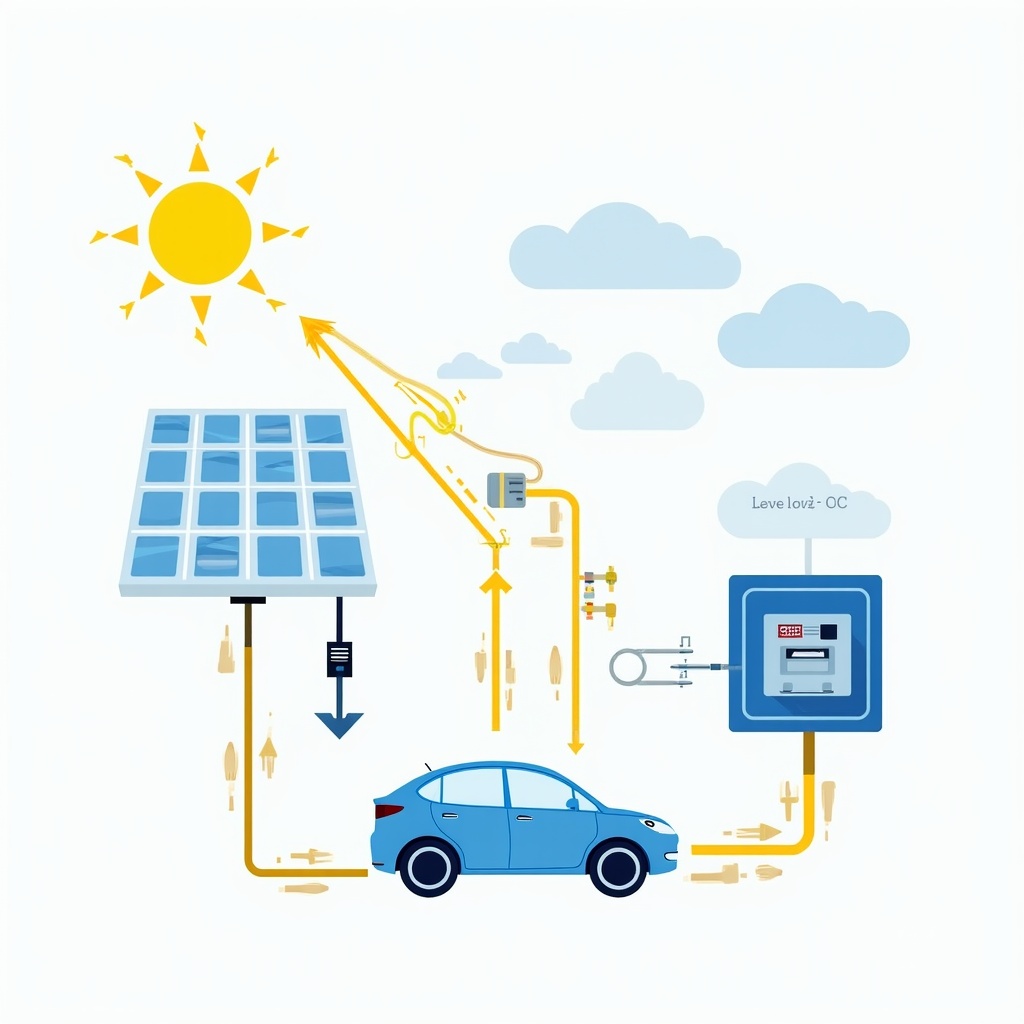
The Role of Smart Charging and Real-Time Energy Management
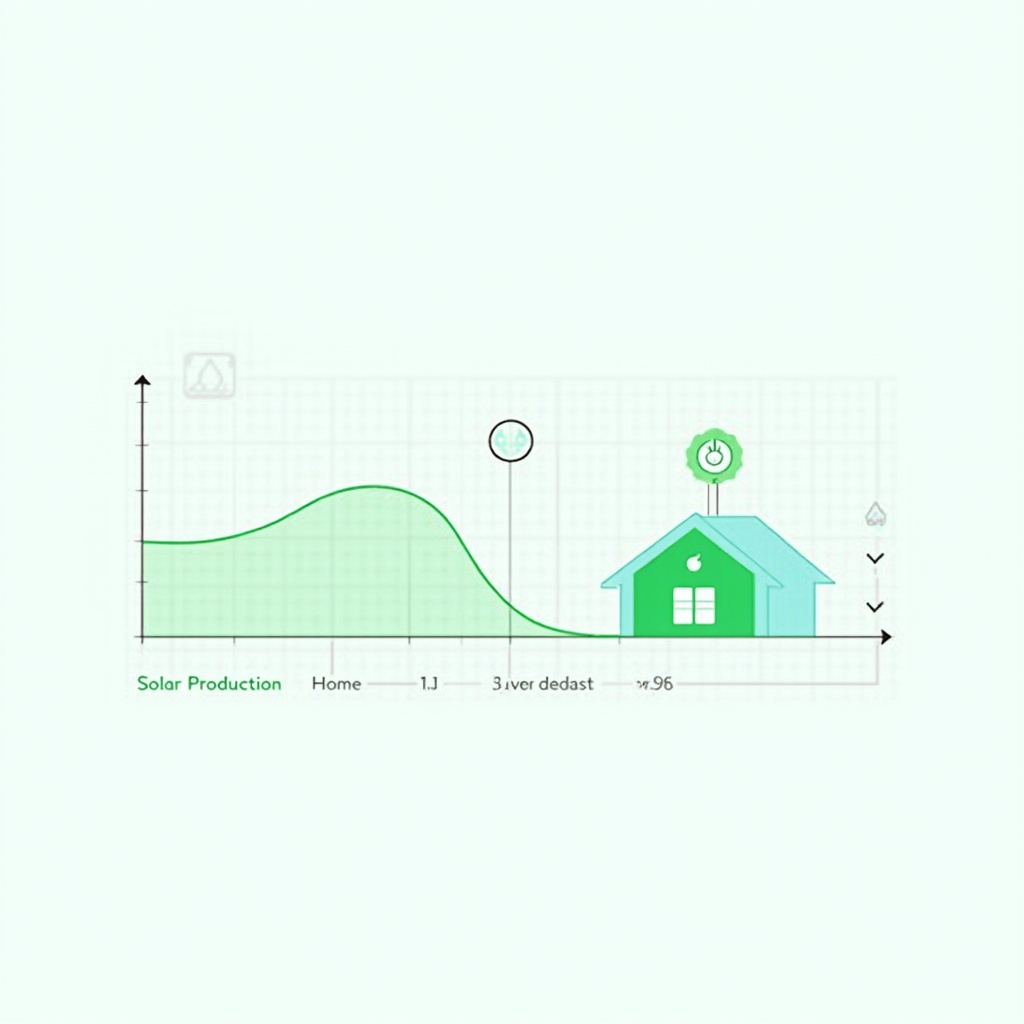
Modern solar EV charging systems go beyond simple direct connections. Smart chargers equipped with real-time power management capabilities can optimize charging based on instantaneous solar production and household consumption patterns. These intelligent systems employ dynamic load management, continuously monitoring solar generation and automatically adjusting the charging speed to maximize solar utilization while preventing electrical panel overloads.
For instance, on sunny days when solar production exceeds household consumption, the charger automatically increases power delivery to the EV battery. Conversely, during cloudy periods or when household appliances require significant power, the charger reduces its charging speed or temporarily halts charging to prevent overloading the electrical system. Some advanced systems offer multiple charging modes, including "Eco Mode," which intelligently blends grid power with surplus solar energy to ensure consistent charging while maximizing solar contribution, and "Full-Green Mode," which charges exclusively with solar energy once sufficient surplus power becomes available.
Off-Grid Solar Systems: Complete Energy Independence
Off-grid solar systems represent the ultimate form of energy autonomy, operating entirely independently from the utility grid. These systems combine solar panels, charge controllers, a large battery storage bank, and an inverter to create a self-contained power generation and storage ecosystem. The philosophy behind off-grid design emphasizes resilience and self-sufficiency, though this comes with significant technical and financial implications.
The core components of an off-grid system work in concert to ensure continuous power availability. Solar panels generate DC electricity during daylight hours. A charge controller, typically an MPPT (Maximum Power Point Tracking) unit, regulates the power flow from the panels to the battery bank, continuously optimizing the charging process. Advanced MPPT controllers can extract 20-30% more energy compared to basic PWM controllers during partial shading or temperature fluctuations. The battery bank stores excess solar energy for use during nighttime hours or overcast periods, while an inverter converts stored DC power back to AC for household use and EV charging.
For off-grid EV charging specifically, the energy storage requirements become substantial. Since a typical EV requires 40-100 kWh for a full charge, and this represents five to six days of typical household consumption in many homes, off-grid systems must be carefully sized to accommodate this demand. Most off-grid installations incorporate 3-5 days of battery backup, often requiring 26-40 kWh of lithium iron phosphate (LiFePO4) battery storage to ensure reliable power even during extended cloudy periods.
The sizing strategy for off-grid systems emphasizes what industry experts call "over-paneling," installing solar capacity exceeding the charge controller's maximum rating. This approach ensures that battery banks receive full charging even during suboptimal conditions like cloudy weather or short winter days, as the controller simply limits input to safe levels while maximizing energy harvest when conditions improve. A typical off-grid home might require 8-12 solar panels combined with 26-40 kWh of battery storage, with the system designed to fully recharge the battery bank within 6-8 hours of good sunlight conditions.
Off-grid systems offer compelling advantages, particularly for remote properties lacking reliable grid access. These systems provide complete independence from utility companies and electricity rate fluctuations. They continue operating during grid outages, delivering uninterrupted power to critical loads including EV chargers. With modern LiFePO4 batteries offering 15-20 year lifespans and 5,000-8,000 charge cycles compared to traditional lead-acid batteries lasting merely 500 cycles, the long-term reliability has improved dramatically.
However, off-grid systems present significant financial hurdles. The total installed cost ranges from $40,000 for basic cabin installations to $150,000 or more for full-home systems providing complete energy independence. This represents approximately $30,000 to $40,000 more than equivalent grid-tied systems, with battery storage alone constituting at least $20,000 of the total investment. Beyond initial costs, off-grid systems require ongoing maintenance including regular battery monitoring, periodic generator servicing, and system monitoring to track state of charge and prevent battery depletion. Additionally, off-grid systems demand careful energy management and lifestyle adjustments, requiring homeowners to consciously limit power consumption during cloudy periods or rainy seasons when solar production diminishes.
Grid-Tied Solar Systems: Practical and Cost-Effective Solutions
Grid-tied, or on-grid, solar systems represent the most common residential solar configuration, electrically connecting PV panels to the local utility grid through a special inverter capable of synchronizing output with grid electricity and bidirectionally exchanging power. These systems operate in parallel with grid power, fundamentally changing the economics and practicality of solar energy compared to off-grid alternatives.
In grid-tied configurations, solar panels generate DC electricity converted to AC by the inverter and supplied to household loads, including EV chargers. When solar production exceeds immediate household consumption, the surplus electricity flows back into the utility grid through the inverter. Most states mandate net metering, a policy allowing homeowners to receive credits for excess electricity fed back to the grid, effectively using the grid as a virtual battery. During periods of low solar production such as nighttime or heavily overcast days, the system automatically draws electricity from the grid, ensuring uninterrupted power for all household needs including vehicle charging.
The financial advantage of grid-tied systems proves significant. Initial installation costs typically run $20,000 to $30,000 for a residential system, approximately $30,000 less than equivalent off-grid installations. This cost reduction stems primarily from eliminating expensive battery storage systems and backup generators. Grid-tied systems operate with relative simplicity, requiring only solar panels, an inverter, and the EV charger itself, with no complex battery management systems or charge controllers needed. Ongoing maintenance demands remain minimal compared to off-grid alternatives, with most installations requiring only occasional professional monitoring and typical panel cleaning.
For EV charging specifically, grid-tied systems offer practical advantages. The grid connection ensures that vehicle charging needs can always be met, regardless of solar production conditions. On sunny days, charging occurs predominantly using solar energy, earning credits for any surplus power. On cloudy days or during nighttime hours, grid power supplements or fully replaces solar power as needed. This flexibility eliminates the anxiety associated with off-grid systems where excessive cloud cover or seasonal variations could necessitate difficult energy management decisions.
However, grid-tied systems possess inherent limitations. The most significant drawback emerges during grid outages. When the utility grid experiences an interruption, grid-tied solar systems automatically disconnect from the grid to prevent backfeeding electricity into lines where utility workers might be operating. This safety feature means that even when the sun shines brightly, homeowners without battery backup cannot access solar power during outages. Additionally, grid-tied systems without battery storage provide no backup power for critical loads during extended power interruptions, leaving EV charging capabilities dependent entirely on grid availability.
Comparative Analysis: Off-Grid Versus Grid-Tied Systems for EV Charging
The decision between off-grid and grid-tied solar systems for powering EV chargers depends on multiple practical, financial, and environmental considerations. Grid-tied systems suit the vast majority of residential applications, particularly for homeowners with reliable grid access seeking to reduce electricity costs while maintaining convenience and minimizing maintenance burdens. The lower initial investment, simpler installation process, minimal ongoing maintenance, and flexibility of drawing grid power during low solar production periods make grid-tied systems the pragmatic choice for most EV owners.
Grid-tied systems excel at optimizing the economic return on solar investment through net metering benefits. As electricity rates continue rising, the savings from generating solar power become increasingly attractive. For homeowners planning EV adoption, sizing the solar system 30-40% larger than current household needs allows the expanded system to offset both existing consumption and future EV charging demands, converting the vehicle into a clean energy asset rather than an electricity burden.
Off-grid systems serve specialized applications where grid connection proves impossible or economically prohibitive. Remote rural properties, island residences, or locations experiencing frequent prolonged power outages justify the higher cost and complexity of off-grid systems. For EV charging in off-grid contexts, the battery storage and backup generator become essential components enabling vehicle charging regardless of solar availability or weather conditions. These systems provide genuine energy independence and protection from grid vulnerabilities, but require careful system design and ongoing energy management discipline.
A hybrid approach combines elements of both systems, incorporating grid connection with battery backup and solar optimization. Hybrid systems provide grid-tied efficiency and cost benefits while adding battery storage sufficient for critical loads including partial EV charging capability during outages. This middle-path approach costs less than full off-grid systems while providing backup capability that pure grid-tied systems lack.
Practical Implementation: Which System Powers Your EV Charger?
For the vast majority of homeowners, grid-tied solar systems represent the optimal choice for powering EV chargers, balancing cost-effectiveness, reliability, and practical convenience. The system works seamlessly with modern smart chargers that optimize real-time energy usage based on solar production patterns. During sunny periods, the EV charges predominantly with solar energy, earning grid credits for excess production. During cloudy periods or nighttime, the charger draws grid power while continuing to charge reliably.
The implementation process involves several coordinated steps. First, a solar assessment determines the required system size based on household consumption plus anticipated EV charging needs. Modern assessment tools calculate that approximately 8-10 additional solar panels (3-4 kW capacity) should be added to existing systems to adequately cover typical EV charging demands. Next, a licensed electrician integrates the solar system with the home's electrical panel and installs or upgrades the Level 2 EV charger. Smart energy management monitoring systems track real-time solar generation and consumption, optimizing charging schedules to maximize solar utilization and minimize grid dependence.
For properties without grid access or those prioritizing maximum energy independence, off-grid systems become necessary despite higher costs and complexity. These systems require larger solar arrays, typically 8-12 panels minimum, combined with 26-40 kWh of battery storage to reliably support EV charging alongside household consumption. The oversizing strategy ensures reliable operation even during extended cloudy periods or seasonal solar production variations.
Emerging technologies enhance both system types. Vehicle-to-Home (V2H) and Vehicle-to-Grid (V2G) bidirectional charging capabilities transform EVs from mere consumers of electricity into mobile energy storage assets. With appropriate equipment, homeowners can use EV batteries to power homes during outages or sell stored energy back to the grid during peak demand periods, further optimizing the economic value of solar-EV integration.
Conclusion
Solar energy effectively powers electric vehicle chargers through well-designed photovoltaic systems paired with appropriate storage and management technologies. Grid-tied systems provide practical, cost-effective solutions for most homeowners, leveraging utility grid connection to ensure reliable EV charging while maximizing economic returns through net metering. Off-grid systems serve specialized applications where grid independence justifies higher upfront costs and system complexity. Regardless of which architecture is selected, solar-powered EV charging represents a meaningful step toward transportation electrification, reduced electricity consumption, and sustainable energy independence. As solar technology continues advancing and battery storage costs decline, solar-powered EV charging becomes increasingly accessible and economically attractive for discerning homeowners seeking to align their transportation choices with environmental responsibility.