
Choosing an electric vehicle (EV) charger for home use is an important decision that depends on multiple factors including your vehicle's specifications, daily driving habits, home electrical capacity, and budget. With the rapid growth of electric cars, having the right charger at home ensures convenience, fast charging times, and safety. Before diving into the specific considerations for choosing a home EV charger, it's essential to understand the types of chargers available and how they affect your charging experience.
Understanding Types of Home EV Chargers
When selecting a home EV charger, it is important to recognize the three main types of chargers based on charging speed and power requirements:
- Level 1 Chargers (120V): These use a standard household outlet, providing slower charging speeds, typically adding about 3 to 5 miles of range per hour. They are suitable mainly for overnight charging and short daily commutes.
- Level 2 Chargers (240V): These require a dedicated 240V outlet and offer faster charging speeds. Level 2 chargers are the most popular choice for home installation as they provide an efficient balance of charging time and convenience, often fully charging an EV overnight.
- DC Fast Chargers (480V+): These chargers offer very rapid charging, typically replenishing 80% of the battery in 30 to 45 minutes. They are mainly used in commercial settings due to their high cost and power demands, making them impractical for most home setups.
Understanding this classification helps you identify which type matches your needs and home electrical system.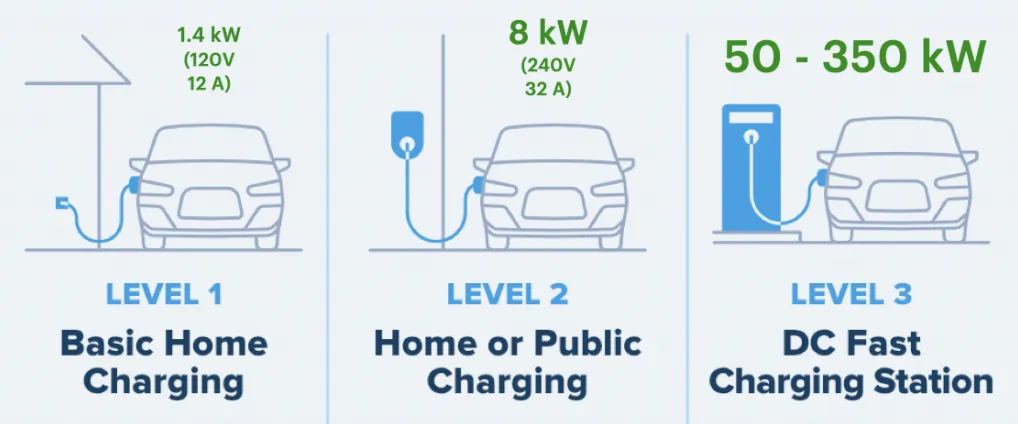
Choosing the Right Charging Speed
Charging speed is a key factor when deciding on a home EV charger. It depends on both your typical daily driving distance and the EV's onboard charger capacity. For instance, if you drive long distances regularly or have multiple EVs in your household, a Level 2 charger with higher amperage (e.g., 40–50 amps) can significantly reduce charging time compared to a Level 1 charger.
However, not all EVs can utilize the maximum amperage available from a home charger; it is essential to check your EV’s onboard charger specifications to match the charger’s output with your vehicle’s capability. An electrician can assess your home's electrical capacity to determine the maximum amperage your system can support safely.
Compatibility with Your Electric Vehicle
A crucial consideration is ensuring your home charger is compatible with your EV’s charging port and standards. In most regions, the J1772 connector is the standard for Level 1 and Level 2 AC charging (except Tesla, which uses the NACS/J3400 connector but provides adapters for J1772).
Compatibility also extends to whether your charger supports the specific charging mode required by your EV and if cables and connectors are suitable for your usual parking configuration. Choosing a charger with a longer cable length (generally between 20 to 25 feet) helps accommodate different parking situations and ease of use.
Smart Features and Added Convenience
Modern home EV chargers often include smart features that enhance convenience and energy efficiency. These features may include Wi-Fi connectivity, the ability to schedule charging during off-peak electricity hours, remote monitoring and control via smartphone apps, integration with home solar power systems, and energy consumption tracking.
Smart chargers can potentially lower charging costs through utility rebates and demand response programs as well as provide users greater insights into their energy usage patterns. They can also offer voice assistant compatibility and other automation, making home charging more seamless.
Installation Considerations and Safety
Installing a home EV charger typically requires professional evaluation and electrical work. Important factors include:
- The location of the charger (indoor garage or outdoor) and the ability of the charging cable to reach the vehicle comfortably.
- Electrical panel capacity, ensuring it can support the charger’s power requirements without overloading existing circuits. A 200-amp electrical panel is often recommended for a Level 2 charger.
- Deciding between a hardwired charger or a plug-in charger using a dedicated 240V outlet (common plug types include NEMA 6-50 or NEMA 14-50). Regulatory and safety requirements such as ground fault circuit interrupter (GFCI) protection may affect this choice.
- Weatherproofing and durability of outdoor chargers, rated by NEMA standards for resistance to water, dust, and temperature extremes.
Hiring a licensed electrician to install the charger ensures compliance with local codes and minimizes safety risks.
Cable Length and Management
Choosing the right cable length and managing it properly is important for ease of use and safety. Longer cables provide the flexibility to park the vehicle in different positions and still reach the charging port. However, cables should be stored neatly using hooks or holsters to avoid tripping hazards, damage, and clutter in the charging area. Some chargers come with integrated cable management systems, which can be a helpful feature in constrained spaces.
Budget and Value for Money
Home EV chargers vary widely in cost, with prices depending on amperage, smart capabilities, brand reputation, and installation complexity. Lower-cost models may lack advanced features or slower charging speeds. It is important to balance upfront investment with desired functionalities to optimize convenience and future-proof your home charging setup.
Installation costs can also significantly impact the total expense. Factors such as electrical panel upgrades and distance from the electrical panel to the charger location affect installation complexity and cost. A clear budget consideration includes both hardware and installation expenses.
Brand Reputation, Certification, and Introducing Feyree
Choosing a charger from a reputable brand with proper safety certifications (e.g., UL Listing, ENERGY STAR® certification) is critical for long-term reliability and safety. Certified chargers ensure adherence to industry standards for efficiency and safe operation.
Furthermore, selecting a trusted and innovative brand like Feyree offers additional confidence. Feyree chargers combine advanced technology, robust safety features, and intuitive smart functions, backed by excellent customer support and continuous updates. By choosing Feyree, homeowners not only invest in a high-quality product but also gain access to future-ready solutions that adapt to evolving electric vehicle technologies and home energy systems.<