
The decision to purchase an electric vehicle represents a significant commitment to sustainability and modern mobility. However, the true convenience of EV ownership unfolds at home—where most charging happens, often overnight, while you sleep. Selecting the right home EV charger requires thoughtful consideration across multiple dimensions. This comprehensive guide explores eight critical factors to help you make an informed decision that aligns with your vehicle, home infrastructure, lifestyle, and long-term needs.
1. Connector Type and Vehicle Compatibility
The first and most fundamental consideration when selecting a home EV charger is ensuring compatibility with your vehicle's charging inlet. This seemingly straightforward decision carries real implications for convenience and future-proofing.
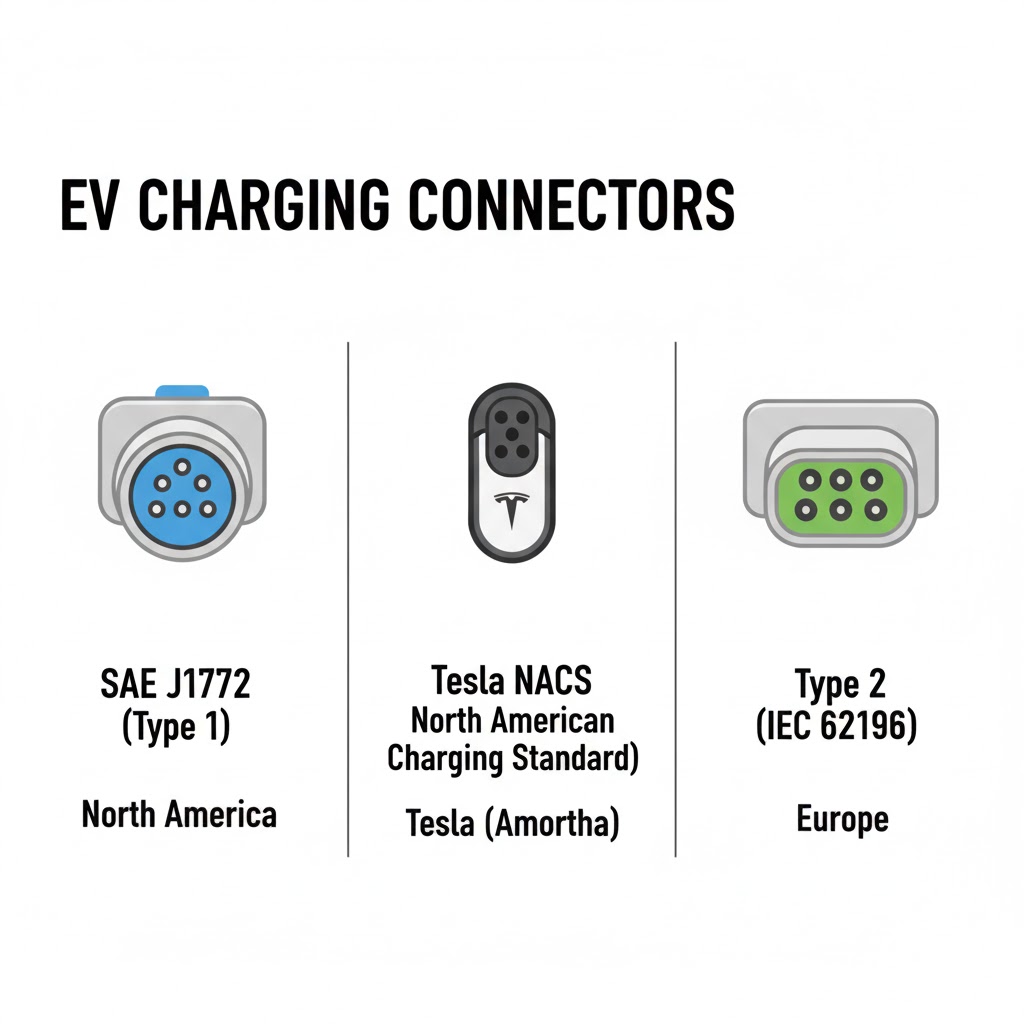
In North America, the SAE J1772 connector (sometimes colloquially called the "J-Plug") represents the industry standard for Level 1 and Level 2 charging across most EV manufacturers. Models from Ford, Chevrolet, Volkswagen, Hyundai, Kia, and numerous other brands all use this standardized connector, making it the default choice for broad compatibility.
However, Tesla traditionally uses a proprietary charging connector on its vehicles. The landscape has begun shifting as Tesla opened its proprietary connector network and other manufacturers, including General Motors, announced plans to transition toward the Tesla connector on future models. This transition reflects the evolving standards within the industry but creates a temporary decision point for current buyers.
For Tesla vehicle owners, you face two viable paths: purchase a Tesla-specific charger for direct plug-and-play convenience, or select a J1772 charger and use Tesla's included adapter. Many EV owners opt for the standardized J1772 charger, as it provides flexibility for hosting other EVs—whether visiting friends' vehicles, future household additions, or rental cars. This flexibility becomes increasingly valuable as EV adoption expands and household transportation patterns evolve.
The practical recommendation is straightforward: if you currently drive a non-Tesla EV or anticipate potential ownership changes, prioritize a J1772-compatible charger. If your household consists exclusively of Tesla vehicles, a Tesla-specific charger may offer marginal convenience advantages, but the standard option provides superior long-term adaptability.
2. Charging Level: Speed Versus Practicality
EV chargers fall into three distinct categories, each operating at fundamentally different power levels and charging speeds. Understanding these levels—and their practical implications for daily life—is essential to matching your charger to your actual needs.
Level 1 Chargers (120V, 1-2 kW)
Level 1 chargers represent the most basic option. They plug into standard household outlets and deliver approximately 1-2 miles of electric range per hour of charging. For a vehicle with a 200-mile battery, a complete charge requires 100-200 hours—or roughly four to eight days of continuous charging. Level 1 chargers exist primarily as convenience fallbacks rather than primary charging solutions. They suit plug-in hybrid owners with modest daily driving, emergency backup scenarios, or supplementary charging when traveling to locations with limited infrastructure. For owners of battery electric vehicles (BEVs) with typical daily driving patterns, Level 1 charging proves impractical for regular use.
Level 2 Chargers (240V, 6-11 kW)
Level 2 chargers have become the industry standard for residential installations because they balance charging speed with practical home electrical requirements. They deliver 10-30 miles of range per hour, depending on the charger's power output and your vehicle's onboard charging capacity. A Level 2 charger can fully charge most EVs in 5-10 hours, making overnight charging a realistic, convenient routine. Most Level 2 installations operate at either 6-7 kW or 9-11 kW capacities, with the higher-powered options providing faster charging at increased electrical infrastructure requirements.
For the vast majority of homeowners, Level 2 charging represents the optimal choice. It provides practical charging speeds—most drivers will wake to a fully charged vehicle after overnight charging—while remaining compatible with standard electrical panel capacities in modern homes.
Level 3 Chargers (480V, 50+ kW)
Level 3 chargers are direct current (DC) fast chargers capable of delivering 80% of a battery charge in 20-40 minutes. However, they require 480V three-phase electrical service, demanding installation costs ranging from $10,000 to $50,000 or more. These chargers are designed for commercial fleets, public charging networks, and specialized facilities—not residential homes. Unless you operate a commercial fleet or live in an extraordinary circumstance, Level 3 chargers fall outside practical home EV charging considerations.
3. Electrical Service Capacity and Potential Panel Upgrades
Your home's electrical infrastructure directly determines what type of charger you can install without major upgrades. Understanding your current electrical capacity—before committing to a charger—prevents costly surprises and rework.
Most modern homes constructed in the past twenty years feature 200-amp electrical service panels, which typically provide sufficient capacity to support a Level 2 EV charger without upgrades. However, older homes, particularly those built before 1990, may operate with 100-amp or 150-amp panels, creating constraints that require assessment.
A Level 2 charger typically requires a dedicated 40-50 amp circuit, representing a substantial draw on residential electrical systems, but not insurmountable for homes with adequate panel capacity. Before selecting your charger, determine your home's total electrical service capacity and consult with a licensed electrician about available capacity after accounting for essential household loads (heating, air conditioning, water heating, major appliances).
If your electrical panel lacks sufficient capacity, upgrades become necessary. Electrical panel upgrades typically cost $500 to $2,000, adding considerably to total installation expenses. In some cases, utility companies offer rebates or incentive programs specifically targeting electrical panel upgrades for EV charging, potentially reducing your out-of-pocket costs significantly. These incentives vary by region, making it worthwhile to investigate local programs before finalizing your installation budget.
4. Installation Location and Physical Space Requirements
Where you install your home charger profoundly affects both its functionality and longevity. The decision between garage, driveway, or other outdoor locations carries practical, safety, and durability implications.
Location Accessibility and Convenience
Ideally, your charger should be positioned near your vehicle's usual parking location, with enough cable length to connect comfortably without creating tripping hazards or requiring vehicle repositioning each charging session. If your vehicle parks in a garage, an interior wall installation offers weather protection and convenient access. If driveway or carport parking is your reality, you'll need an outdoor-rated charger with appropriate weatherproofing.
Weatherproofing and Durability Considerations
Outdoor installations require chargers with robust environmental protection ratings. An IP65 rating or higher ensures protection against dust, rain, and moisture ingress—essential for reliable outdoor operation. Additionally, outdoor chargers should feature UV-resistant casing to withstand prolonged sun exposure without material degradation. In coastal or humid environments, corrosion resistance becomes critical, necessitating chargers constructed from stainless steel or powder-coated materials designed to resist salt spray and moisture-accelerated corrosion.
Protection from Obstruction and Damage
Consider how your landscape and parking patterns will evolve. Avoid locations where other vehicles, garden structures, or landscaping might obstruct access or create safety hazards. Additionally, ensure sufficient clearance around the charger for future maintenance, inspections, and potential upgrades without requiring major repositioning work.
5. Smart Features and Connectivity Options
Modern EV chargers increasingly incorporate WiFi, Bluetooth, app control, and data monitoring capabilities—features that transform charging from a passive process into an actively managed, optimizable component of your energy consumption.
App-Based Control and Remote Monitoring
Smart chargers with mobile app integration allow you to schedule charging sessions during off-peak utility rate periods, potentially reducing charging costs significantly. This "time-of-use" optimization—charging during hours when electricity is cheaper—accumulates into material savings over years of vehicle ownership. Additionally, app connectivity provides real-time charging status monitoring, allowing you to view session progress, identify issues remotely, and receive notifications when charging completes.
Integration with Renewable Energy Systems
Some advanced chargers integrate with home solar systems, enabling you to optimize charging with surplus solar generation. This combination transforms EV charging into an integrated component of home energy management, maximizing use of generated renewable electricity rather than relying exclusively on grid power.
Display Screens and User Interface
Chargers vary in sophistication from simple LED indicator lights to integrated 4.3-inch display screens providing real-time charging information, session duration, energy consumed, and cost data. For users who enjoy granular energy management data, these displays provide tangible visibility into consumption patterns.(1)-0.jpg?w=1024&h=944)
6. Charging Speed Requirements Based on Daily Driving Patterns
The appropriate charging speed depends entirely on your vehicle's battery capacity and your typical daily driving distance. This analysis prevents over-investing in excess capacity you don't require while avoiding insufficient power for your actual lifestyle.
If your daily driving averages 30-40 miles and your EV offers 200+ miles of range, a 6-7 kW Level 2 charger provides adequate overnight charging capacity. A 9-11 kW charger becomes valuable if your daily driving exceeds 50 miles or you frequently face incomplete-charge scenarios requiring faster top-ups. Consider your actual driving patterns over recent months—commute distances, weekend travel frequency, and seasonal variation—rather than hypothetical extreme scenarios.
For most conventional commuters with stable daily patterns, a 7 kW charger delivers a realistic overnight charge from empty to full. If your household operates multiple EVs or experiences high variability in daily distance, investing in a 9-11 kW charger provides valuable flexibility.
7. Installation Costs and Available Incentives
Understanding the full financial picture—charger hardware costs, installation expenses, and available rebates—enables informed budgeting and may reveal incentive programs that dramatically reduce your effective investment.
Equipment Costs
Home EV chargers range from $400 to $1,500 for the hardware itself, depending on power rating, smart features, build quality, and warranty coverage. A basic 7 kW charger typically costs $600-$900, while 11 kW chargers with advanced smart features and robust weatherproofing run $1,000-$1,500 or higher.
Installation Expenses
Installation costs typically range from $500 to $2,500, varying based on several factors: distance from your electrical panel to the installation location, whether permits and inspections are required (virtually universal), existing wiring infrastructure, and local labor rates. A short interior garage installation with nearby panel access might cost $500-$1,000, while a long driveway run requiring trenching, conduit installation, or exterior construction could reach $2,500 or more.
Permits and Inspection Fees
Local jurisdictions require permits and inspections to ensure installations meet electrical code and safety standards. These fees typically range from $100-$500 but vary significantly by municipality.
Rebates and Incentives
Many regions offer financial incentives specifically targeting EV charger installation. Federal tax credits, state rebates, utility company programs, and EV manufacturer incentives can reduce your effective installation cost by 25-50% or more. Before finalizing your purchase, investigate local incentives available in your area—your savings may be substantial and require only minimal paperwork to claim.
8. Warranty Coverage and Long-Term Support
An overlooked but critical consideration is the warranty coverage provided with your charger and the level of manufacturer support available if issues emerge.
Typical Warranty Coverage
Most quality residential EV chargers include 2-3 year warranties covering defects and failures. Premium manufacturers sometimes extend warranties to 5 years or offer extended plans for additional cost. A 3-year warranty provides reasonable protection during the period immediately following installation when defects most commonly manifest.
Charger Lifespan and Durability
Quality EV chargers typically function reliably for 10+ years with routine maintenance and protection from the elements. Selecting a charger from established manufacturers with strong quality reputations, robust weatherproofing, and proven track records in the field provides confidence in long-term reliability.
Support and Repair Services
Reputable charger manufacturers maintain responsive customer support, technical help lines, and authorized service networks. Before committing to a charger, investigate manufacturer support responsiveness, parts availability, and repair service options. Quality support becomes invaluable if issues emerge after warranty expiration or if your charger requires maintenance.
Conclusion: Making Your Decision
Selecting a home EV charger requires balancing compatibility, practical charging speed requirements, electrical infrastructure capacity, installation convenience, feature sophistication, and total lifecycle costs. Begin with connector compatibility and charging level decisions—these fundamental choices constrain all subsequent options. Evaluate your electrical infrastructure and obtain electrician assessment for installation feasibility and cost estimates. Consider your daily driving patterns to right-size charging power requirements. Research available incentives in your region before finalizing your decision. Finally, prioritize quality, warranty coverage, and manufacturer support reputation—your home charger will serve you for a decade or longer, making reliability and dependability worthwhile investments. With thoughtful consideration across these eight dimensions, you'll select a charger that seamlessly supports your electric vehicle ownership experience for years to come.