As electric vehicles (EVs) continue to gain popularity, understanding how to charge them efficiently is becoming increasingly important for drivers. Among the charging standards available today, J1772 and CCS are two of the most commonly used, especially in North America and Europe. Although they may seem similar at first glance, each serves a different purpose and affects the EV charging experience in unique ways. This article dives deep into what makes these two standards distinct, helping EV owners make informed decisions about their charging needs.
What Is J1772? The Foundation of Everyday Charging
The J1772 connector, developed by the Society of Automotive Engineers (SAE), has become the staple for residential and public AC charging across North America. It is often referred to as the "Level 1" and "Level 2" charger, depending on the charging speed.
J1772’s design includes five pins: two for delivering alternating current (AC) power, one grounding pin to ensure safety, and two pins that allow communication between the vehicle and charger. This communication regulates power flow and ensures a secure, reliable connection.
J1772 chargers typically deliver up to 19.2 kW of power at 240 volts, making them perfectly suited for overnight or workplace charging where vehicles stay plugged in for hours. This is why J1772 is the preferred choice for most home charging setups and is widely compatible with nearly all EVs sold in North America, except Tesla vehicles that require a J1772 adapter.
One of J1772’s biggest strengths is its simplicity and economy. It’s cost-effective to install and maintain, reliable across diverse environments, and easy for users to handle, providing a hassle-free charging experience for everyday needs.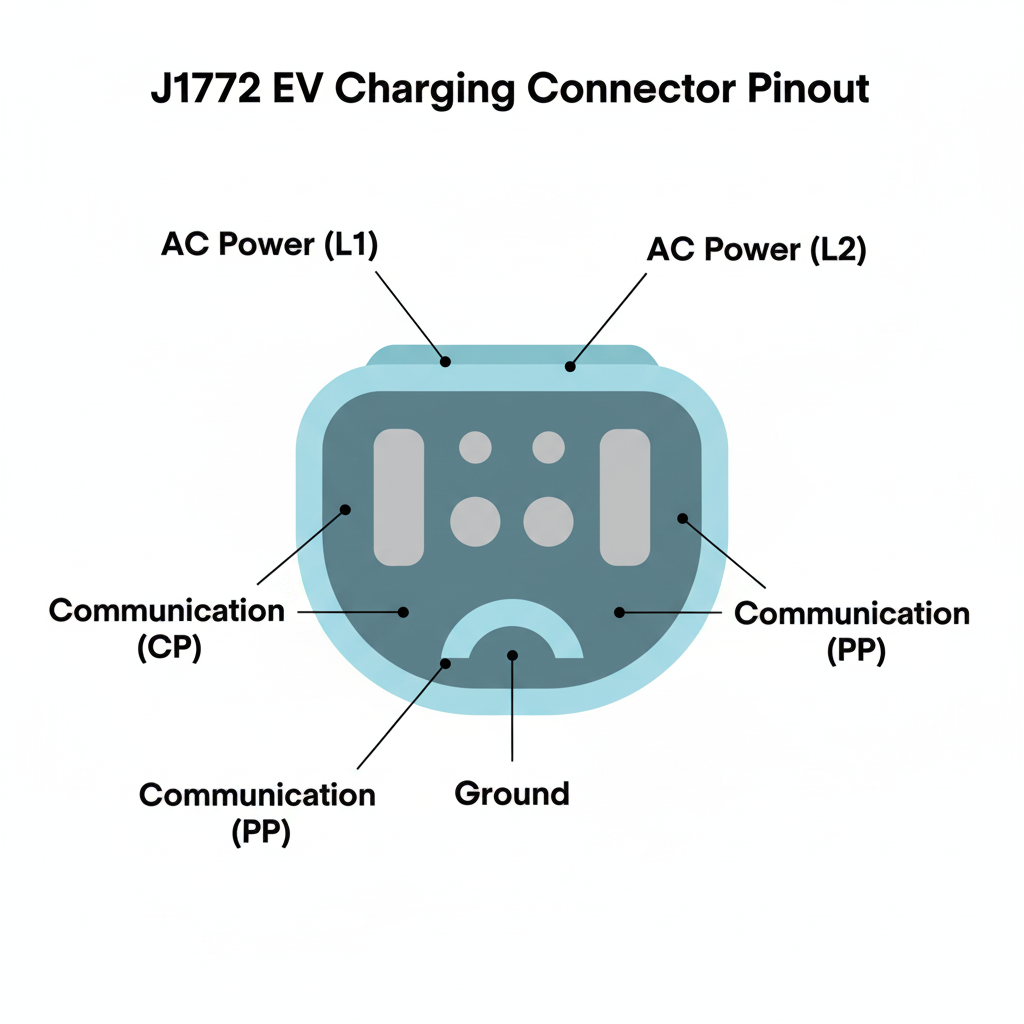
What Is CCS? The Power of Fast Charging Combined with Flexibility
The Combined Charging System (CCS) builds upon the J1772 standard by adding two large pins below the AC connector for direct current (DC) fast charging. This combined design allows CCS to support both traditional AC charging through the J1772 section and rapid DC charging via the additional pins, all through a single connector.
This dual capability is what makes CCS increasingly popular, especially for drivers who want the convenience of home charging but also need to charge quickly on the go. CCS chargers can provide power outputs ranging from 50 kW up to an impressive 350 kW or more, cutting down charging times dramatically. Drivers can add significant range to their EV batteries in a matter of minutes compared to hours with AC charging.
Thanks to support from a consortium of major automakers across North America and Europe, CCS has become the leading fast-charging standard worldwide. Most modern EVs come equipped with CCS ports, making it easier than ever to find fast chargers compatible with your vehicle.
Despite being physically larger due to the extra DC pins and added safety features like enhanced insulation and cooling systems, the CCS plug retains backward compatibility with J1772 AC chargers, providing EV owners with versatility in charging options.
Key Differences Between J1772 and CCS Chargers
| Feature | J1772 | CCS |
|---|---|---|
| Connector Pins | 5 pins for AC power and communication | 7 pins: 5 AC + 2 DC fast charge |
| Charging Type | AC charging only (Level 1 & Level 2) | AC + DC fast charging (Level 3) |
| Max Power Output | Up to ~19.2 kW | 50 kW to 350+ kW |
| Ideal Use | Home, workplace, slower daily charging | Fast charging at public stations |
| Vehicle Compatibility | Most non-Tesla EVs (adapter for Tesla) | Most new EVs globally |
| Plug Size and Weight | Compact, lightweight | Larger, heavier due to DC pins |
| Charging Speed | Slower, suitable for hours-long charging | Much faster, minutes-long charging |
| Cost of Charger | Lower, simpler technology | Higher, advanced hardware |
| Safety Features | Standard safety protocols | Enhanced insulation & cooling |
What These Differences Mean for EV Owners
For everyday EV owners who primarily charge their cars overnight or during work hours, J1772 offers a practical and user-friendly solution. Its widespread availability and straightforward operation make charging at home or public Level 2 stations simple and reliable. If most driving involves short to moderate distances, J1772’s charging speed is often sufficient.
However, for those who frequently take longer trips or rely on fast public charging for convenience, CCS offers significant advantages. The ability to rapidly recharge an EV battery in 20 to 30 minutes or less makes traveling longer distances more feasible and less stressful. The CCS’s compatibility with both AC and DC charging means drivers don’t have to worry about carrying multiple adapters or cables — they can rely on one versatile standard.
Tesla owners, while initially using a proprietary connector, now need adapters to access J1772 and CCS stations, illustrating the growing convergence around these standards in the industry.
Cost, Infrastructure, and Safety Considerations
From an infrastructure perspective, J1772 charging stations are simpler, more affordable, and thus more common in home and office environments. This makes them an excellent choice for budget-conscious EV owners or those installing chargers where fast charging isn’t necessary.
CCS stations, on the other hand, require more complex technology, such as advanced cooling and power management systems, to safely deliver high DC currents. This translates to higher installation and maintenance costs and is why CCS chargers are mostly found at dedicated public fast-charging locations along highways and urban centers.
Both J1772 and CCS include robust communication protocols to monitor charging status, ensure safety during connection and disconnection, and prevent electrical faults. CCS’s enhanced safety features are designed to handle high power levels without compromising user or vehicle safety.
The Road Ahead for EV Charging Standards
As the EV market accelerates, so does the evolution of charging standards. While J1772 will remain the backbone of everyday AC charging in North America for the foreseeable future, CCS’s fast-charging capabilities are becoming increasingly integral to long-distance travel and commercial EV use.
New standards, such as Tesla’s North American Charging Standard (NACS), are emerging and might influence future infrastructure, but currently, J1772 and CCS continue to dominate the landscape.
For EV buyers and owners, having a solid understanding of these standards helps in making smarter decisions about vehicle choice, charger purchases, and travel planning to ensure a smooth ownership experience.
-1.png?w=1024&h=1024)
Reflecting on J1772 and CCS Charging Adapters
When looking at J1772 and CCS adapters, it becomes clear how each plays a unique role in the electric vehicle charging landscape. J1772 stands out as a dependable, straightforward solution tailored for everyday charging needs. Its wide adoption and compatibility make it easy for drivers to charge their EVs conveniently at home or work with a simple, familiar plug.
On the other hand, CCS brings incredible flexibility and speed to the table. By combining AC charging capabilities with the power of direct current fast charging, CCS adapters meet the demands of long-distance travelers and anyone needing a rapid refill of their EV battery. This advanced capability comes with increased complexity and cost, but it's a worthwhile trade-off for the time saved on charging stops.
For EV owners, choosing between J1772 and CCS—or more often, benefiting from both—is about matching charging habits with lifestyle. Slow and steady with J1772 is perfect for those who have ample time and access to overnight charging. Fast and efficient with CCS is best for hitting the road and minimizing waiting time.
Ultimately, understanding these differences helps drivers make smarter choices, not only in selecting their vehicles and home chargers but also in planning how and where to charge. As the electric vehicle world grows and evolves, being informed about charging technology empowers owners to enjoy a smoother and more flexible EV experience.