
Electric vehicles (EVs) represent the future of sustainable transportation, but many owners don't realize that not all the electricity they pay for actually makes it into their vehicle's battery. Understanding where energy is lost during the charging process and how to minimize these losses can save you money, reduce environmental impact, and extend your vehicle's battery life.
The Reality of Charging Efficiency
When you plug in your EV, the charging efficiency typically ranges from 80% to 95%, meaning 5% to 20% of the electricity is lost as heat or consumed by auxiliary systems. This may not seem significant, but over the lifetime of your vehicle, these losses can add up to thousands of dollars in wasted electricity and unnecessary carbon emissions.
Where Does Energy Go? Understanding the Loss Points
1. AC to DC Conversion Losses
Most home charging uses alternating current (AC) from the grid, but EV batteries store direct current (DC). This conversion happens either in your home charger (Level 2) or in the vehicle's onboard charger, and typically accounts for 10-15% of total losses.
The onboard charger contains transformers, rectifiers, and power electronics that generate heat during conversion. Higher-quality chargers with better components and cooling systems can reduce these losses to 5-8%. Temperature plays a crucial role here—chargers operating in hot environments or enclosed spaces without adequate ventilation experience higher conversion losses.
-27.jpg?w=1024&h=559)
2. Battery Chemistry and Temperature Effects
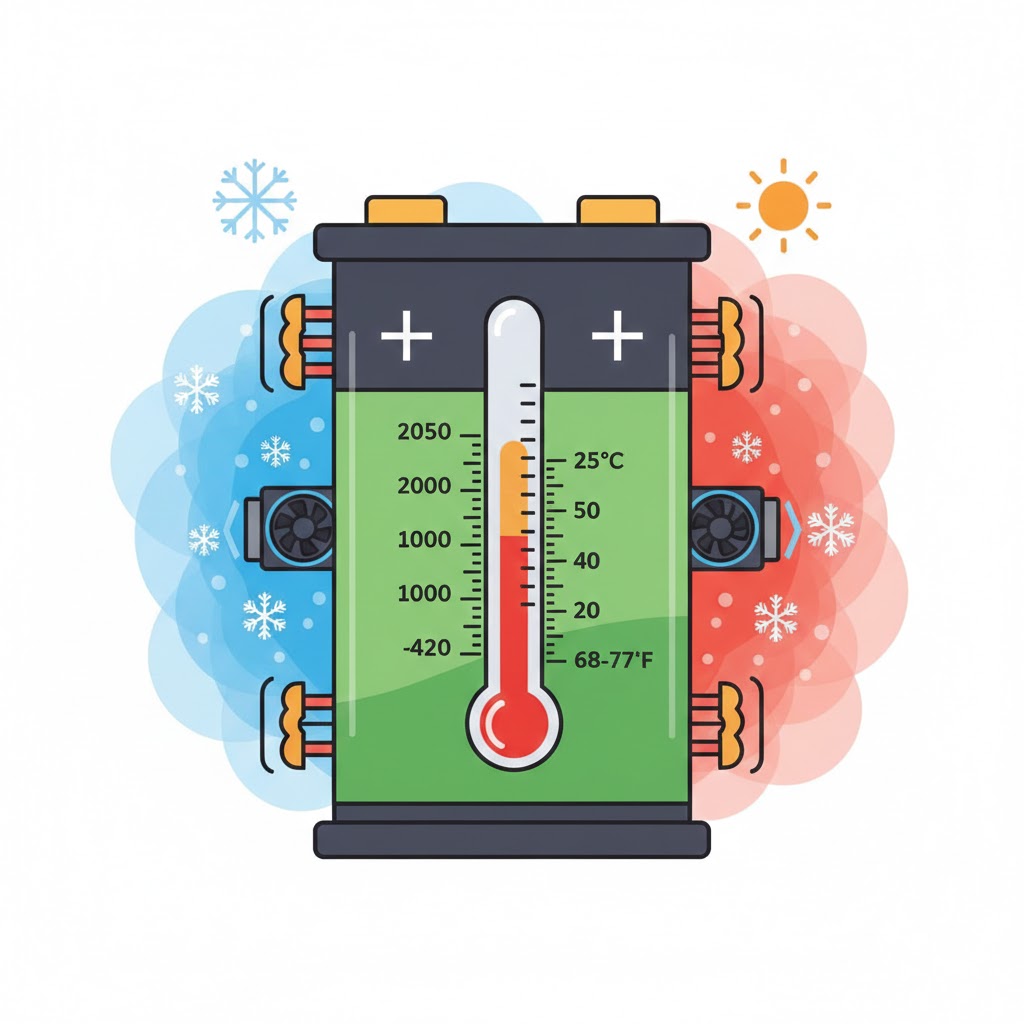
Your battery's temperature dramatically affects charging efficiency. Lithium-ion batteries operate optimally between 20°C and 25°C (68°F to 77°F). Outside this range, efficiency drops significantly.
In cold weather below 0°C (32°F), the battery's internal resistance increases, and chemical reactions slow down. Your vehicle must use energy to heat the battery before and during charging, sometimes consuming 20-30% more electricity than in moderate conditions. Conversely, in extreme heat above 35°C (95°F), cooling systems activate to protect the battery, also consuming additional energy.
The battery management system (BMS) works constantly during charging to balance cells, monitor temperature, and ensure safe operation. While essential for battery longevity, these systems typically consume 2-5% of charging energy.
3. Cable and Connection Resistance
Electrical resistance in charging cables causes energy loss as heat. This is governed by the physics principle I²R (current squared times resistance). Longer cables, thinner gauge wires, or corroded connections increase resistance and waste more energy.
A typical Level 2 charging cable might have 0.1-0.3 ohms of resistance. At 32 amps, this translates to 100-300 watts of power lost as heat—enough to noticeably warm the cable. Low-quality or damaged cables can double or triple these losses.
4. Vampire Drain and Standby Power
Even when not actively charging, your EV consumes power for various systems. The battery management system, security features, computer systems, and cellular connectivity continue operating, drawing 0.5-2 kW daily depending on the model and settings.
Additionally, many charging stations consume 5-20 watts of standby power when connected but not actively charging, similar to how phone chargers draw power when plugged in without a device attached.
5. DC Fast Charging Trade-offs
DC fast chargers bypass the onboard charger by sending DC power directly to the battery, which should be more efficient. However, the extreme charging speeds (often 50-350 kW) generate substantial heat in both the battery and charging equipment.
The battery's cooling system works overtime during fast charging, consuming significant energy. Additionally, the high current causes greater resistive losses in connections and cables. While DC fast charging saves time, it typically operates at 85-90% efficiency compared to 90-95% for slower Level 2 charging.
Environmental Factors That Amplify Losses
Extreme Temperatures
Cold weather is particularly challenging. In regions where winter temperatures drop below -10°C (14°F), owners report 30-50% reductions in effective charging efficiency. The vehicle must warm both the cabin (if you've enabled preconditioning) and the battery pack, dramatically increasing energy consumption.
Hot climates above 40°C (104°F) force cooling systems to work continuously, adding 10-20% to charging energy consumption. Desert environments combine high temperatures with direct sunlight on the vehicle, further increasing cooling demands.
Humidity and Altitude
High humidity can cause condensation in charging equipment, potentially leading to corrosion over time that increases resistance. Very dry environments can increase static electricity and dust accumulation on electrical contacts.
At high altitudes, air cooling becomes less effective due to lower air density, potentially causing charging equipment to throttle performance or run cooling fans longer, both reducing efficiency.
Grid Power Quality
Voltage fluctuations, harmonics, and power factor issues from the electrical grid can reduce charging efficiency. If your home voltage frequently deviates from the nominal 240V (or 120V for Level 1), the charging system must work harder to regulate power, generating extra heat and waste.
User Behavior and Charging Habits
Charging Speed Selection
Charging at maximum speed isn't always most efficient. Many EVs achieve peak efficiency at 60-80% of their maximum charging rate. Constantly charging at the maximum rate generates more heat and accelerates battery degradation, which reduces long-term efficiency.
State of Charge Management
Charging from 0% to 100% is less efficient than maintaining your battery between 20% and 80%. The final 20% of charging (80-100%) often takes disproportionately longer and generates more heat as the BMS carefully balances cells and reduces current to protect the battery.
Similarly, frequently letting your battery drop below 20% means you're charging during the least efficient part of the charging curve more often.
Charging Frequency
Frequent small charging sessions can be less efficient than fewer, larger sessions because you're repeatedly initiating the charging process, which includes initial handshaking between car and charger, BMS preparation, and potential battery preconditioning.
How to Minimize Energy Losses: Practical Solutions
Optimize Your Home Charging Setup
Upgrade to Level 2 Charging: If you're still using Level 1 (standard 120V outlet), upgrading to Level 2 (240V) can improve efficiency by 5-10%. Level 2 chargers have better power electronics and reduced charging time means less total time for vampire drain and standby losses.
Choose Quality Equipment: Invest in a high-quality Level 2 charger with at least 85% efficiency rating. Look for models with active cooling, smart temperature monitoring, and durable construction. Certifications like UL or Energy Star indicate better efficiency standards.
Proper Installation: Ensure your electrician uses appropriately sized copper wiring (not aluminum) with minimal run length from your electrical panel. A 25-foot run of 6-gauge copper wire is far superior to a 50-foot run of 8-gauge aluminum. Keep connections clean and tight—loose connections increase resistance significantly.
Temperature Management Strategies
Garage Charging: If possible, charge your EV in a garage or carport. Even an unheated garage typically stays 5-10°C warmer than outside in winter and cooler in summer, improving efficiency by 10-15% in extreme weather.
Strategic Timing: In cold weather, plug in immediately after driving while the battery is still warm from use. This minimizes the energy needed for thermal conditioning. In hot weather, charge during cooler evening or nighttime hours.
Preconditioning: Use your vehicle's scheduled preconditioning feature to warm or cool the cabin and battery while still plugged in. This draws power from the grid rather than the battery, preserving your charged range.
Insulation: For extreme climates, consider insulating your garage or using a battery thermal wrap (if compatible with your vehicle). Some EV owners report 15-20% efficiency improvements in winter with proper thermal management.
Smart Charging Practices
Charge at Moderate Speeds: If time permits, charge at 70-80% of your charger's maximum capacity. This reduces heat generation and improves overall efficiency by 3-5%.
Maintain Optimal State of Charge: Set your vehicle to charge to 80% for daily use, only charging to 100% before long trips. Similarly, try to plug in before dropping below 20%. This keeps you in the battery's most efficient operating range.
Scheduled Charging: Use your vehicle's or charger's scheduling feature to charge during cooler nighttime hours. This improves efficiency and often takes advantage of off-peak electricity rates.
Minimize Vampire Drain: Disable unnecessary features when parked. Turn off "always connected" features, excessive security monitoring, or cabin overheat protection when not needed. This can save 1-2 kWh daily.
Cable and Connection Maintenance
Regular Inspection: Check your charging cable and connectors monthly for wear, corrosion, or damage. Clean connectors with electrical contact cleaner every few months.
Use Shorter Cables: If you have flexibility in parking position, use the shortest cable that comfortably reaches your vehicle. Every meter of cable adds resistance.
Quality Matters: If replacing a cable, choose heavier gauge wires rated for higher current than you need. A cable rated for 40 amps will run cooler and more efficiently at 32 amps than one rated exactly at 32 amps.
Leverage Technology
Smart Chargers: Modern smart chargers can optimize charging curves based on your battery's state, temperature, and even electricity rates. They can automatically reduce power when the battery is cold, preventing efficiency losses from forcing current into a cold battery.
Monitoring Systems: Install an energy monitoring system to track actual charging efficiency. This helps identify problems early, like increasing resistance from aging cables or degrading charger components.
Vehicle Settings: Explore your EV's settings for efficiency modes. Some vehicles offer "gentle charge" modes that prioritize efficiency over speed.
The Financial Impact
Consider a typical scenario: A driver with a 75 kWh battery charging 5 times weekly at $0.13/kWh. Improving efficiency from 85% to 92% means charging requires 66 kWh instead of 71 kWh per session. Over a year, this saves 1,300 kWh, or approximately $170 annually. Over a 10-year ownership period, that's $1,700 saved, plus reduced environmental impact.
Conclusion
Understanding and minimizing EV charging losses requires attention to multiple factors: equipment quality, environmental conditions, charging habits, and maintenance. While some losses are unavoidable, implementing the strategies outlined here can improve your overall charging efficiency by 10-20%, translating to real savings and reduced environmental impact.
The key is taking a holistic approach—optimizing your charging infrastructure, managing environmental factors, adapting your habits to your battery's needs, and maintaining your equipment properly. Small improvements in each area compound into significant overall gains, making your EV ownership experience more economical and sustainable.
As EV technology continues advancing, we can expect improvements in charger efficiency, battery thermal management, and smart charging systems. However, the fundamental principles of minimizing resistance, managing temperature, and charging intelligently will remain central to maximizing efficiency. By understanding these principles and applying them consistently, you can ensure that more of every dollar you spend on electricity goes toward actually moving your vehicle forward.