Tesla vehicles have revolutionized electric vehicle (EV) charging experiences globally, yet the charging standards they use differ significantly between North America and Europe. This divergence plays a crucial role in how owners charge their Teslas, affects interoperability with regional charging infrastructures, and impacts the convenience and efficiency of EV ownership across continents.
Transitioning Between Standards: Understanding the Landscape
Tesla’s distinct charging standards in North America and Europe reflect broader regional differences in EV infrastructure, regulations, and historical technology adoption. As illustrated in discussions among Tesla owners on platforms like the Tesla Motors Club forum, these differences can challenge users moving vehicles across regions or adapting to new charging environments.
The Tesla Motors Club forum reveals how North American Tesla owners often experience a more proprietary charging setup with Tesla’s own North American Charging Standard (NACS), whereas European Tesla owners use the Combined Charging System Type 2 (CCS2), mandated by EU regulations for broader interoperability. The forum discourse highlights that while a European Tesla can charge in North America without substantial issues, an American Tesla in Europe often needs adapters or modifications to connect to local chargers, underscoring the practical impact of these standard differences.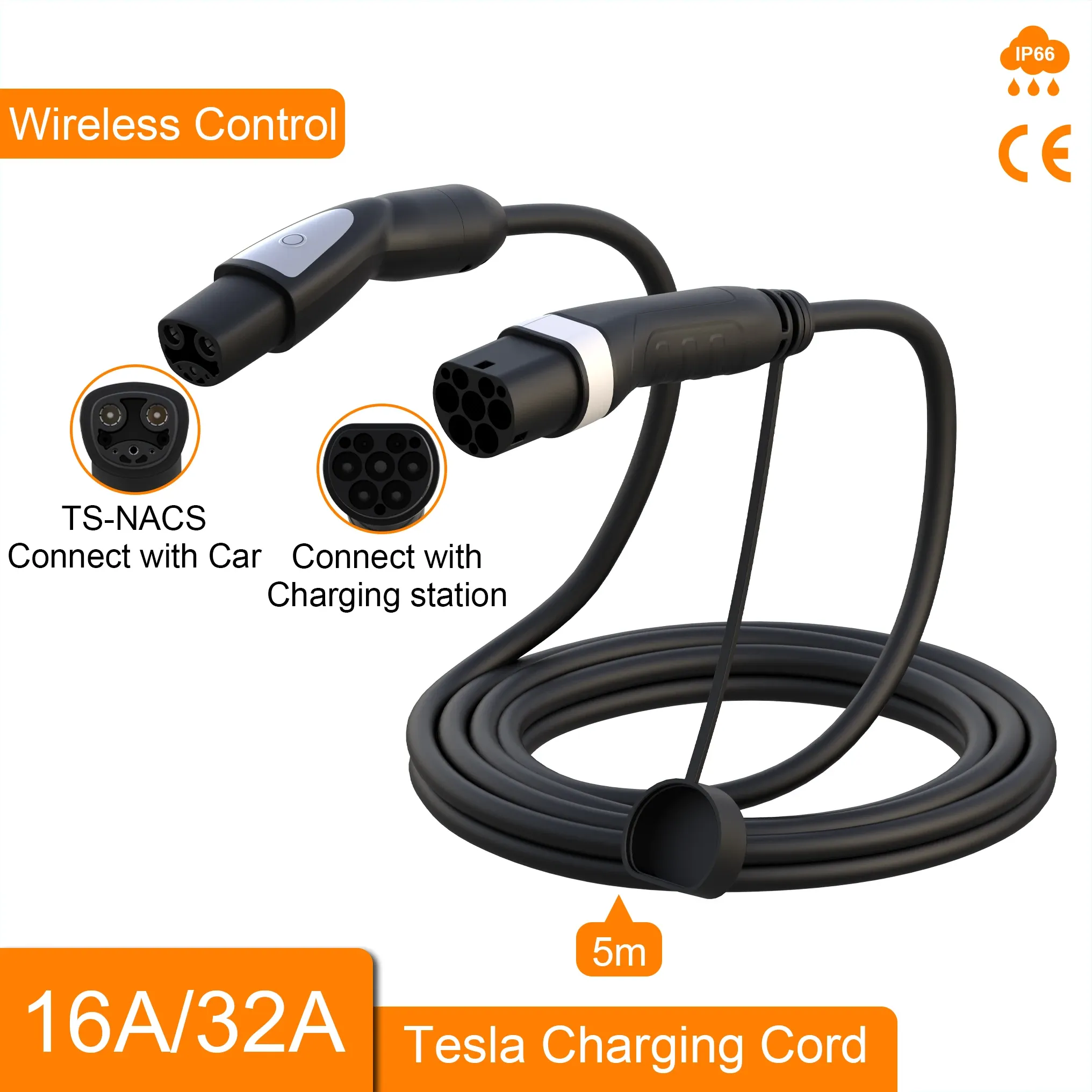
Tesla Charging in North America: The NACS Ecosystem
In North America, Tesla uses the North American Charging Standard (NACS), a proprietary connector that supports both AC and DC charging via the same port. Tesla’s NACS plug is smaller, lighter, and easier to handle compared to competitors’ connectors, which enhances user experience. This charging standard dominates Tesla’s Supercharger network and home charging solutions in the region.
NACS supports single-phase AC charging up to 7.4 kW for home or destination chargers and high-speed DC charging at Superchargers without requiring multiple connectors or adapters. Tesla’s decision to innovate this proprietary standard results not only in a design that is more ergonomic but also ensures energy replenishment efficiency, reportedly doubling the speed of CCS1 (common in non-Tesla North American EVs).
Tesla Charging in Europe: The CCS2 Mandate
In Europe, Tesla conforms to the Combined Charging System Type 2 (CCS2) standard, widely adopted across EU countries, including by most non-Tesla EV manufacturers. This adoption is driven by EU regulations aiming for uniform charging infrastructure to facilitate cross-border travel and interoperability.
The European Tesla uses a CCS2-compatible port that supports three-phase AC charging at up to 11 kW, which is faster and more efficient for home or public AC charging compared to the North American single-phase system. For DC fast charging, the CCS2 standard incorporates DC pins alongside the Type 2 connector, allowing high-powered Supercharging without proprietary plugs.
While Tesla uses the CCS2 standard externally, the connector remains compatible with local infrastructure, enabling Tesla owners to charge at numerous public charging points without the need for adapters. This European approach benefits from the extensive CCS network but requires Tesla to modify its usual connector design and infrastructure management..png?w=1168&h=880)
Practical Implications for Tesla Owners
Tesla owners face particularly tangible effects of the differing charging standards when moving vehicles between continents. A European Tesla can charge on North American AC power and at some DC stations relatively easily, but operates primarily with CCS2 for DC fast charging in Europe.
Conversely, North American Teslas cannot directly use European CCS2 fast chargers. Owners must either use adapters, or in some cases, retrofit their vehicles with European charging ports to access the extensive CCS2 network in Europe. This added complexity and cost is a notable downside for American Teslas imported into Europe.
Additionally, the European Tesla supports faster home charging with three-phase power, a feature unavailable on the North American single-phase charging system. This influences overall charging time and convenience for daily use. Moreover, navigation systems and warranty service terms also vary by region, complicating cross-continental ownership further.
The Future of Tesla Charging Standards: Coexistence or Convergence?
Industry conversations suggest that Tesla’s NACS might expand beyond North America, as some European and global automakers show interest in this smaller, faster charging interface. However, adoption in Europe is constrained by regulatory and infrastructural inertia favoring CCS2 standardization.
The European automotive industry values the CCS framework’s interoperability and existing investments, making a switch to Tesla’s NACS unlikely in the near term. Conversely, in North America, NACS may become the de facto standard as more automakers adopt it, challenging the legacy CCS1 standard.
This divergence indicates a future where Tesla’s charging standards continue to coexist tailored to regional requirements rather than a single seamless global standard. Tesla owners and EV enthusiasts must thus stay informed about these differences to navigate the evolving landscape successfully.