
Home EV Charger Installation: A Step-by-Step Guide and Hidden Costs to Avoid
Planning your home charging setup? Here's what actually determines cost, safety, and long-term reliability — beyond the price tag on the wallbox.
Installing a home EV charger may sound like a simple upgrade, but many homeowners quickly discover that the wallbox itself is only part of the total cost. Cable routing, breaker selection, electrical panel capacity, protective devices, and installation labor can all add significantly to the final bill if you do not plan ahead.
That is why understanding home EV charger installation before making a purchase can save both time and money. The smartest place to start is not by comparing charger brands, but by evaluating your home's electrical system, parking layout, and charging requirements.
Start with the Layout, Not the Charger
Before comparing charging power or smart features, take a look at the route between your electrical panel and the location where the charger will be installed. If the wallbox can be mounted close to both the electrical panel and your regular parking space, installation is usually quicker, simpler, and less expensive.
However, if cables must travel a long distance, pass through multiple walls, ceilings, or underground conduits, installation costs can increase considerably due to additional materials and labor.
It is also important to distinguish between the charging cable attached to the wallbox and the installation cable running from the electrical panel to the charger. The charging cable should be long enough to comfortably reach your vehicle without creating unnecessary clutter, while a longer installation cable increases both material costs and installation complexity.
For most residential installations, a 5 m to 7 m charging cable is sufficient. A 10 m cable may be worthwhile if multiple parking positions need to be served, but buying more cable than necessary usually adds cost without providing much practical benefit.
A good rule is to measure the actual distance from the wallbox to your vehicle's charging port and add only a small amount of extra length for convenience.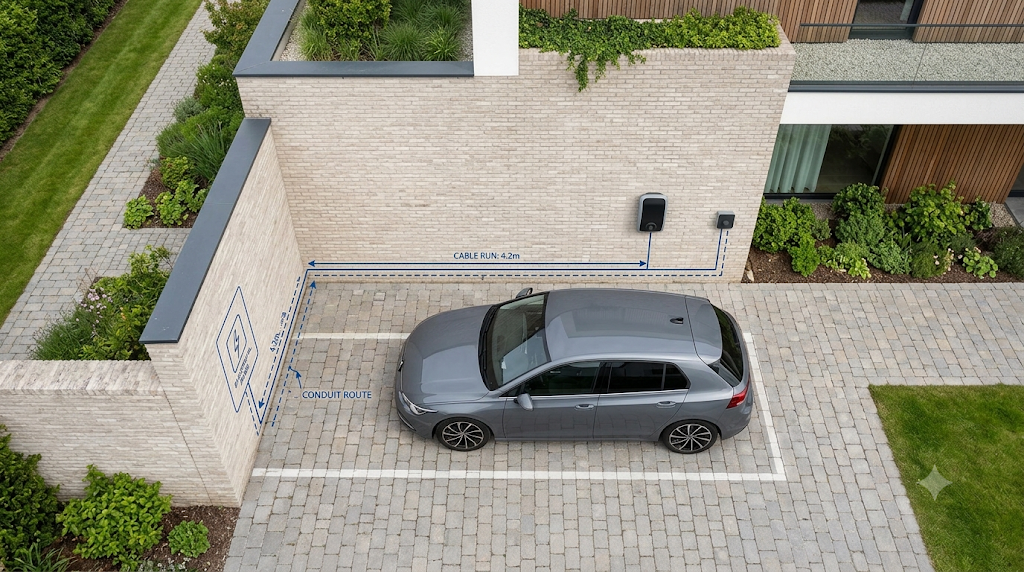
Understand European Installation Requirements
In Europe, an EV charger is considered a permanent electrical installation rather than an ordinary household appliance. Although specific regulations vary between countries, most installations follow the safety principles defined by IEC 61851, IEC 60364, and national electrical codes.
A compliant installation generally includes:
- A dedicated charging circuit
- Appropriate circuit breaker protection
- Residual current protection (RCD)
- Correct cable sizing
- Installation by a qualified electrician
Because EV chargers operate as continuous electrical loads, sharing the circuit with other high-power appliances is generally not recommended. Proper circuit design helps improve safety, charging reliability, and long-term performance.
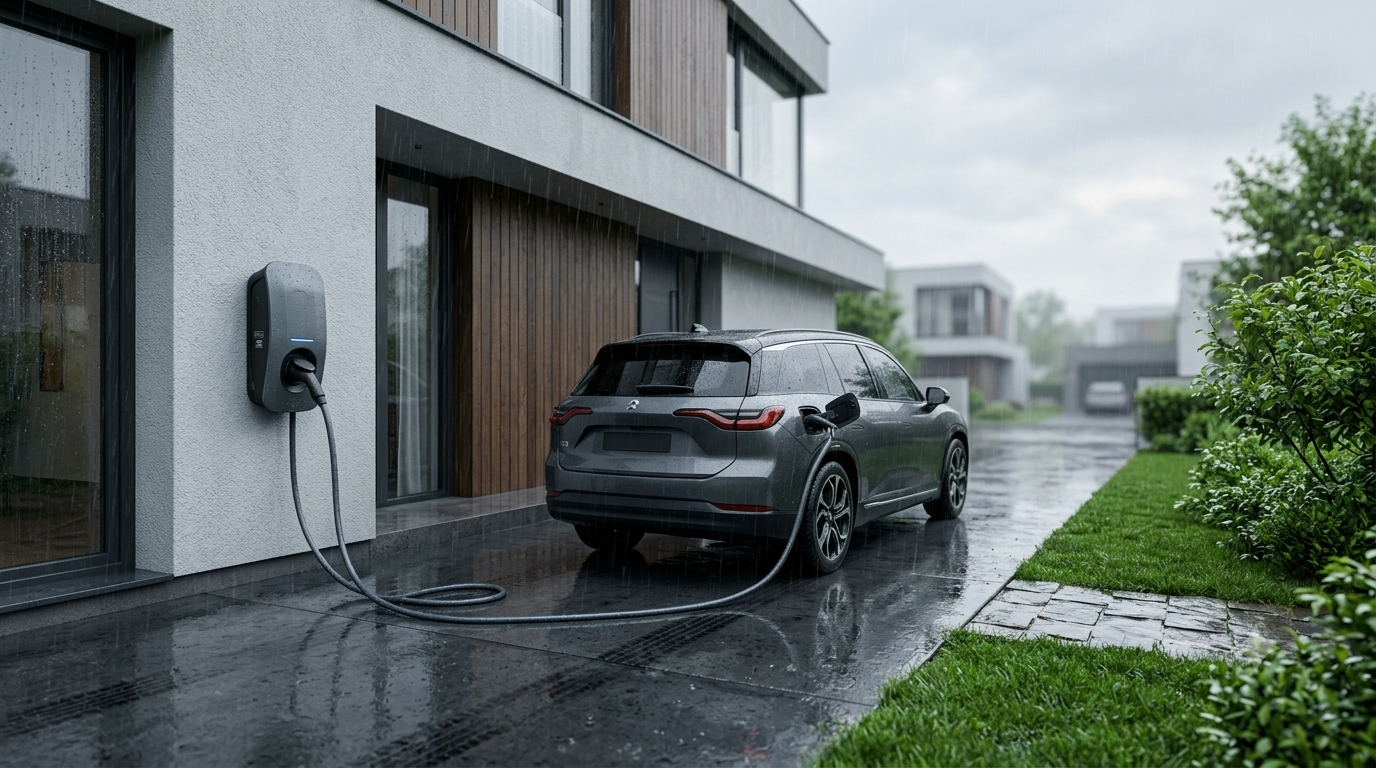
For outdoor installations, weather protection is equally important. The charger enclosure, cable routing, and mounting location should all be suitable for long-term exposure to rain, sunlight, and changing temperatures.
| IP Rating | Dust Protection | Water Protection | Typical Applications |
|---|---|---|---|
| IP54 | Limited dust protection (dust will not affect normal operation) | Protected against water splashes from any direction | Indoor garages and covered parking areas |
| IP55 | Limited dust ingress | Protected against low-pressure water jets | Semi-outdoor installations with light weather exposure |
| IP65 ⭐ | Completely dust-tight | Protected against low-pressure water jets from any direction | Most outdoor residential EV chargers; suitable for rain, dust, and daily outdoor use |
| IP66 | Completely dust-tight | Protected against powerful water jets | Outdoor commercial installations and harsher environments |
| IP67 | Completely dust-tight | Protected against temporary immersion in water (up to 1 m for 30 minutes) | Flood-prone areas or demanding industrial environments |
Choose the Right Charger for Your Daily Driving
The most powerful charger is not always the best choice.
For homes with a single-phase electrical supply, a 7.4 kW charger is often sufficient for overnight charging and provides an excellent balance between charging speed and installation cost.
If your property has a 400 V three-phase electrical supply, an 11 kW charger can significantly reduce charging time and is the most common residential solution in many European countries.
A 22 kW charger delivers even faster AC charging but requires a compatible three-phase electrical supply, sufficient electrical capacity, and a vehicle capable of accepting 22 kW AC charging. Otherwise, the additional installation cost may provide little practical benefit.
Connector compatibility is usually straightforward because Type 2 (IEC 62196-2) has become the standard AC charging connector throughout Europe.
Many chargers also include features such as app control, scheduled charging, Dynamic Load Balancing (DLB), solar integration, and energy monitoring. These functions can be valuable, but only if they match your actual charging habits. If you simply charge overnight every day, a reliable charger with fewer advanced features may offer better overall value.
Don't Underestimate Wiring and Protection Costs
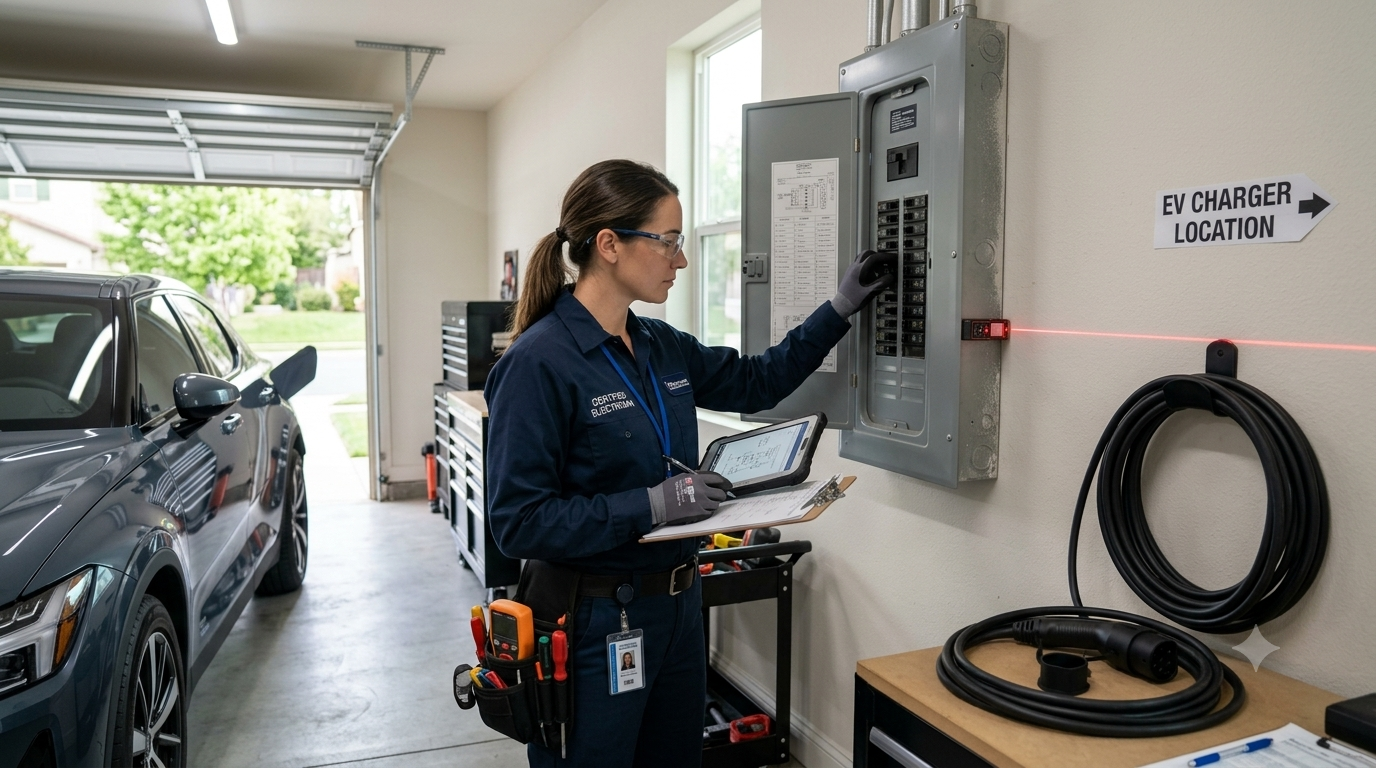 Many homeowners focus on the charger itself while overlooking the electrical components that make the installation safe and compliant.
The cable route, conductor size, circuit breaker, residual current protection (RCD), and overall electrical design all influence both installation cost and long-term reliability.
In many residential 7.4 kW installations, 6 mm² copper cable is commonly used for relatively short cable runs. Longer distances, higher ambient temperatures, installation methods, or local electrical regulations may require 10 mm² cable instead. The final cable size should always be determined by a qualified electrician.
Circuit breaker selection also depends on more than the charger's rated current. A 32 A charger does not automatically require the same protective configuration in every installation. The electrician must consider cable size, installation method, continuous load, voltage drop, and local regulations before selecting the appropriate protective devices.
Residual current protection is equally important. Depending on the charger's internal design, installations commonly use either a Type A RCD with integrated 6 mA DC leakage protection or a Type B RCD, as required by local regulations.
Hidden Costs That Often Surprise Homeowners
One of the biggest mistakes homeowners make is assuming the advertised charger price represents the total project cost.
In reality, additional expenses often appear after the installer performs a site inspection.
Common hidden costs include:
- Electrical panel upgrades
- Additional cable runs
- Wall drilling or trenching
- Earthing improvements
- Weatherproof installation accessories
- Protective devices
- Electrical testing and certification
- Local permits or inspection fees where applicable
If your electrical panel has limited spare capacity or requires upgrading, this alone can become one of the largest installation expenses. Likewise, complicated cable routes or older electrical systems often require additional labor that is impossible to estimate from product specifications alone.
A professional site survey before purchasing equipment is usually the best way to avoid unexpected costs later.
How to Keep Installation Costs Under Control
Saving money does not mean cutting corners on safety.
Instead, focus on simplifying the installation wherever possible.
Choose a charger location that minimizes cable runs, purchase a charging cable that matches your actual parking position, and only invest in smart features that provide genuine value for your household.
Most importantly, arrange a site inspection before purchasing the charger. An experienced electrician can evaluate your electrical panel, available capacity, cable routing, and protection requirements, allowing you to receive a far more accurate installation quotation.
Planning ahead almost always costs less than correcting problems after installation has already begun.
Final Thoughts
Installing a home EV charger is one of the most worthwhile upgrades for EV owners, but the charger itself is only one part of the project.
A successful installation depends on choosing the right charging power, understanding your home's electrical capacity, selecting appropriate cable lengths and protection devices, and ensuring the installation complies with local regulations.
With careful planning and professional installation, you can avoid unexpected expenses, improve charging reliability, and enjoy safe, convenient home charging for many years to come.