UTP vs. FTP vs. STP vs. S/FTP Ethernet Cables: Which One Is Best for Your EV Charger and Home Network?
When shopping for Ethernet cables, you've probably come across abbreviations like UTP, FTP, STP, or S/FTP. To many people, they look like confusing technical terms or simply different product names.
In reality, these abbreviations describe how an Ethernet cable is shielded against electrical interference, and choosing the right one can make a significant difference depending on where the cable is installed.
For a typical home office, a standard unshielded cable is often all you need. However, environments with solar inverters, electrical panels, industrial equipment, or smart EV chargers may benefit from additional shielding to improve communication reliability.
In this guide, we'll explain the differences between the most common Ethernet cable types, where each one is best used, and why cable selection matters for modern smart EV charging systems.
1. Why Does Ethernet Cable Shielding Matter?
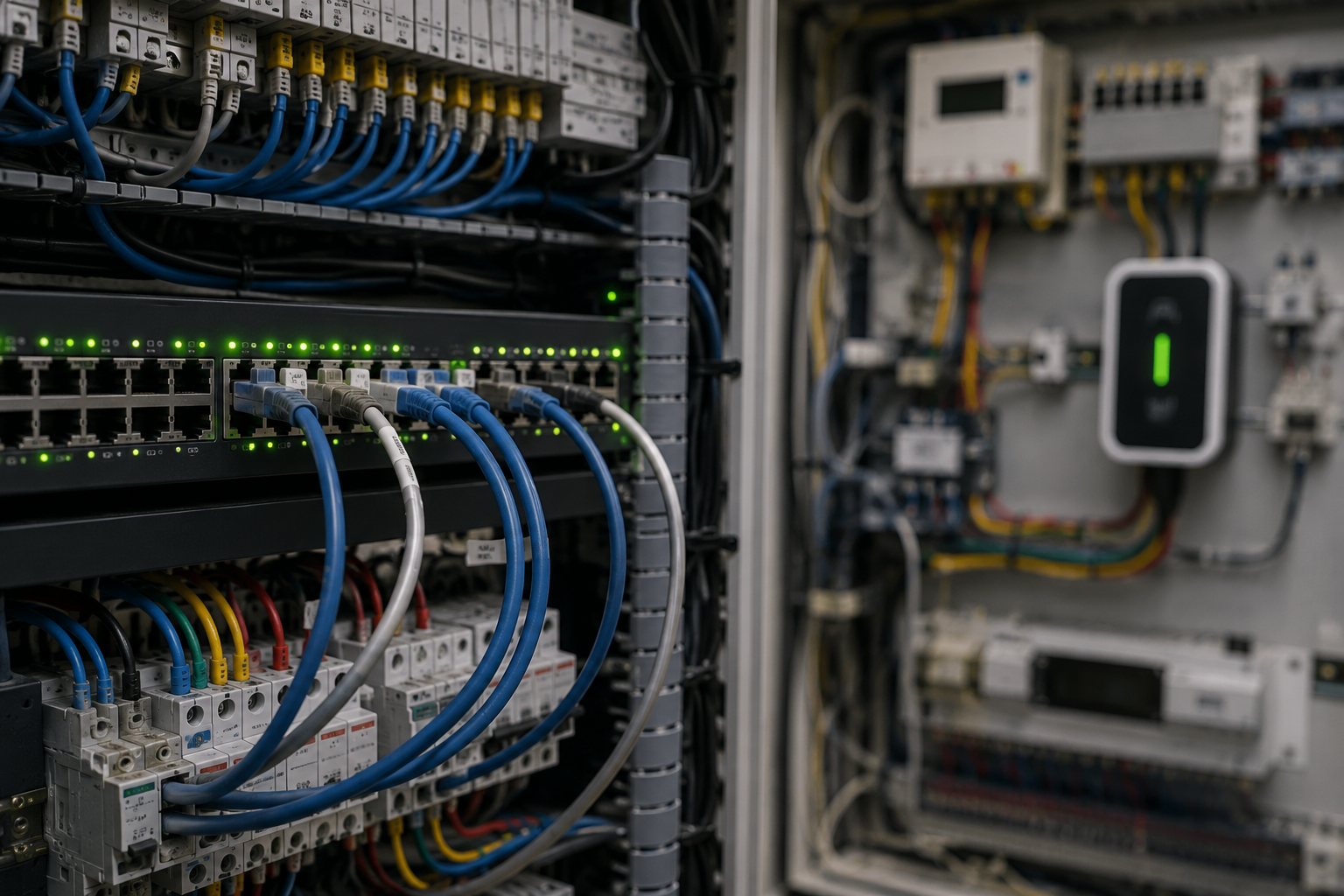
Ethernet cables carry data using twisted pairs of copper wires. The twisting itself helps reduce interference, but it cannot eliminate all electrical noise. Modern homes and commercial buildings contain many devices that generate Electromagnetic Interference (EMI), including:
- Electrical distribution panels
- Solar power inverters
- Electric motors & HVAC systems
- High-voltage power cables
- Industrial machinery
- EV charging stations
When an Ethernet cable runs close to these devices, electromagnetic noise can seep into the line. This can lead to several network performance issues:
- Unstable network connections and random disconnects
- Slow communication speeds and increased latency
- Packet loss during data transmission
- Smart devices or EV chargers temporarily going offline
2. Deep Dive: Ethernet Cable Types Breakdowns
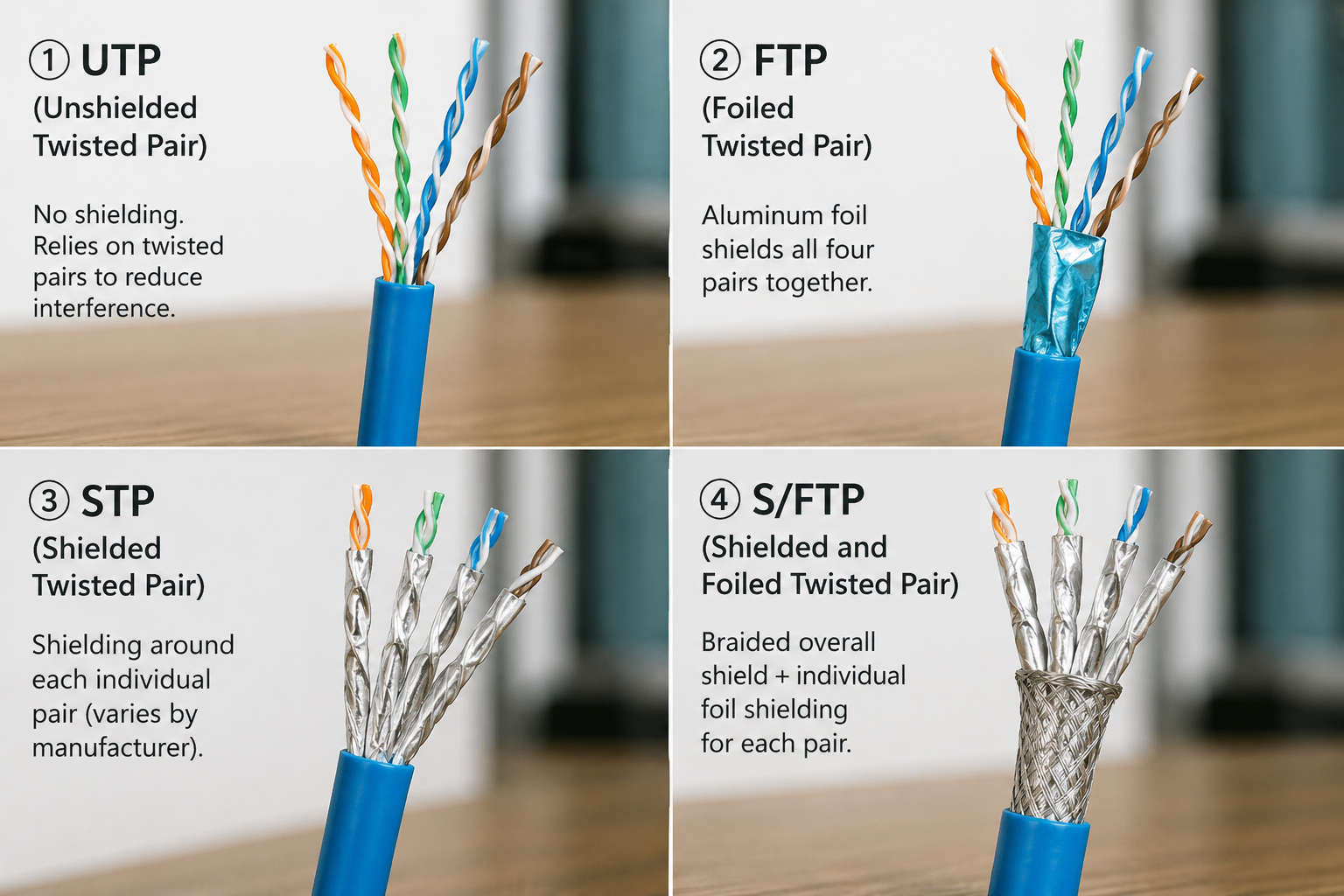
① UTP (Unshielded Twisted Pair)
UTP is the most common Ethernet cable used today. It contains no additional metal shielding; instead, it relies entirely on the twisted wire pairs to minimize interference.
- Advantages: Lowest cost, highly flexible, lightweight, and easy to install.
- Best Applications: Ideal for standard residential use, including home internet connections, office networks, gaming setups, smart TVs, security cameras, and Wi-Fi access points.
If your cable isn't installed near heavy electrical equipment, a quality Cat6 UTP cable is usually more than capable of supporting Gigabit Ethernet and beyond.
② FTP (Foiled Twisted Pair)
Unlike UTP, FTP cable adds a layer of aluminum foil around all four twisted pairs combined. This extra layer helps block external electromagnetic interference before it reaches the conductors inside.
- Advantages: Better EMI protection than UTP, reliable communication in electrically noisy environments, with only a moderate price increase.
- Best Applications: Commonly used in office buildings, commercial facilities, small server rooms, and smart building installations where cables must run close to electrical wiring for part of their route.
③ STP (Shielded Twisted Pair)
STP cables generally offer better protection than standard FTP cables. Depending on the manufacturer, STP may refer to cables with shielding around individual wire pairs or other specific shielding configurations (often following precise ISO designations).
- Advantages: High-level isolation from heavy external interference.
- Best Applications: Industrial automation, manufacturing plants, factory equipment, data centers, and machine control systems.
④ S/FTP (Shielded and Foiled Twisted Pair)
Among common Ethernet cable types, S/FTP provides one of the highest levels of interference protection. This dual-layer construction features an overall braided shield combined with individual foil shielding around every single twisted pair. It minimizes both external EMI and internal crosstalk.
- Advantages: Exceptional signal integrity under extreme conditions.
- Best Applications: Large data centers, hospitals, industrial control rooms, high-speed networking labs, and smart energy management systems.
3. Quick Comparison Matrix
| Cable Type | Shielding Structure | EMI Protection | Typical Applications |
|---|---|---|---|
| UTP | None | Low | Homes, standard offices, everyday networking |
| FTP | Overall foil outer layer | Medium | Commercial buildings, multi-tenant properties |
| STP | Additional/Individual shielding | High | Industrial facilities, manufacturing lines |
| S/FTP | Individual foil + overall braided shield | Very High | Data centers, automation, smart energy systems |
Crucial Rule: More shielding isn't always better. Shielded cables are beneficial only when interference is actually present and must be properly grounded to work effectively. Otherwise, an ungrounded shield can actually act as an antenna and worsen interference.
4. Ethernet Shielding & EV Chargers: Myth vs. Reality
Does a Long Cable Run Require a Shielded Cable?
The short answer is: Not necessarily. Cable length alone is not the reason to choose a shielded Ethernet cable.
Standard copper Ethernet cables are designed to support reliable communication over distances of up to 100 meters (328 feet) without performance loss. If your cable run stays within this distance and is routed away from major electrical lines, a high-quality Cat6 UTP cable will perform perfectly.
When SHOULD You Upgrade to Shielded Cables for EV Chargers?
Upgrading to FTP, STP, or S/FTP is highly recommended if your installation involves any of the following scenarios:
- The Ethernet cable runs parallel alongside main power cables for long distances.
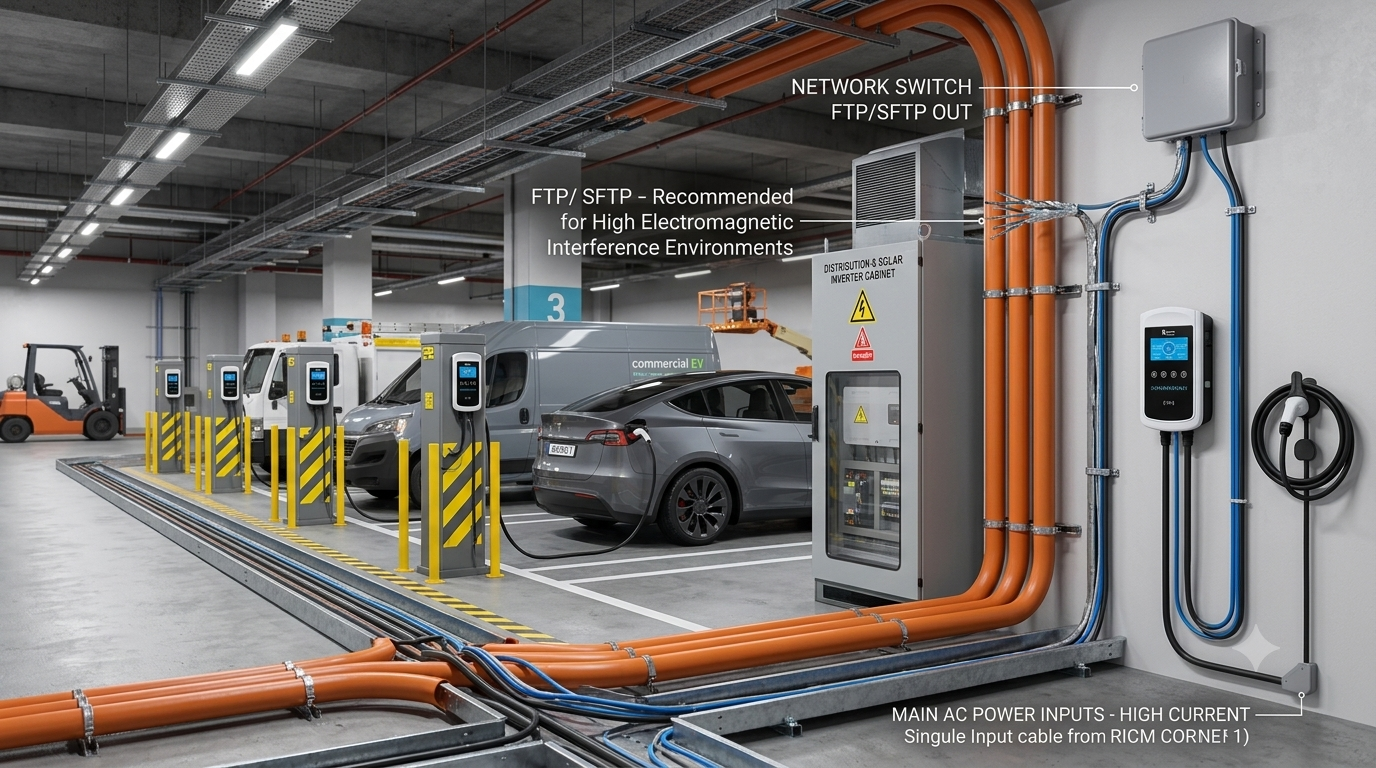
- The charger is installed inside an underground parking garage with heavy infrastructure.
- The installation is located in a commercial parking lot or industrial facility.
- The cable passes directly near main electrical distribution panels or solar power inverters.
- Long distance + low interference = Cat6 UTP is usually sufficient.
- Long distance + high interference = Consider FTP or S/FTP.
5. Application Guide: Scenario-Based Selection
To simplify your decision, look for your specific installation environment below:
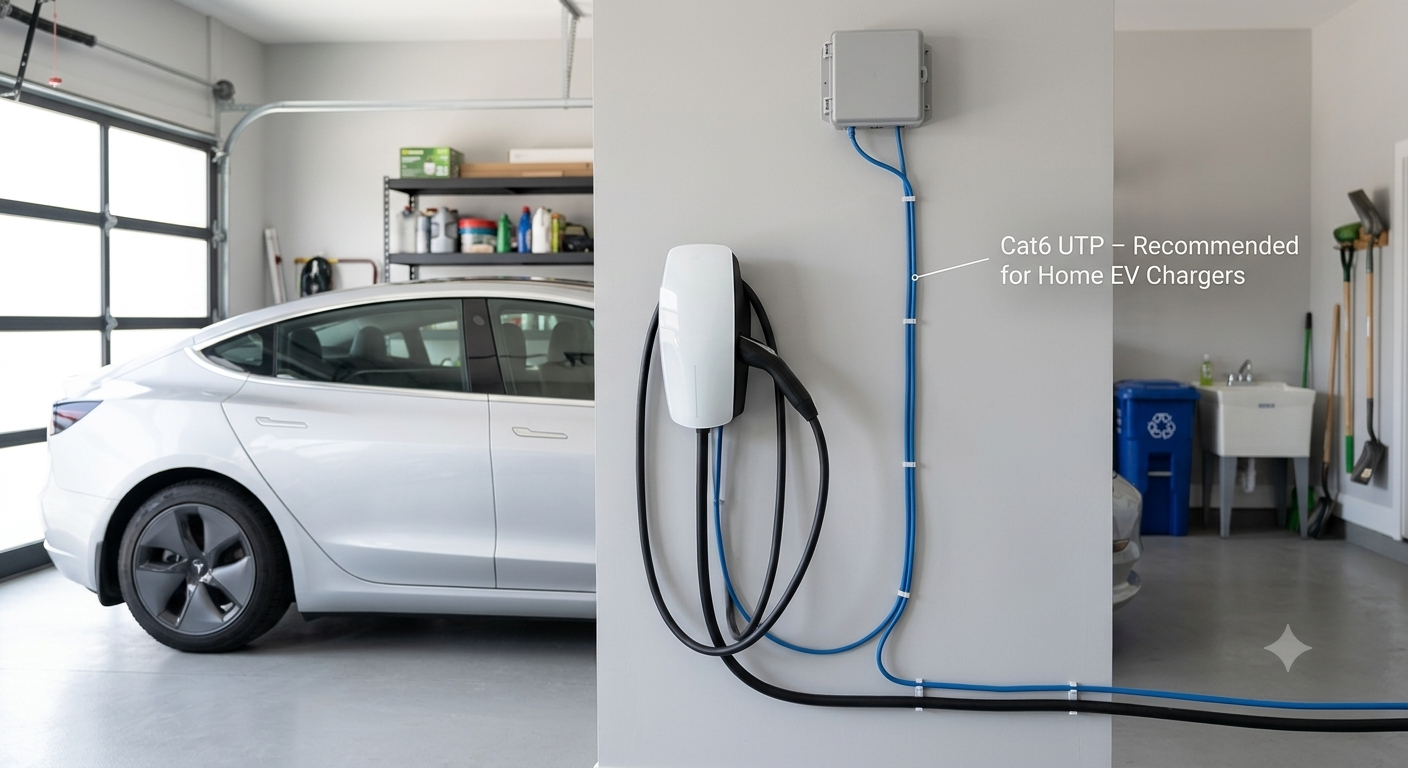
- Home Garage: A Cat6 UTP cable is typically the most practical, flexible, and cost-effective choice.
- Detached Garage / Outdoor Shed: If the cable passes near underground main lines or heavy outdoor electrical setups, FTP provides an ideal layer of extra protection.
- Commercial Parking Lots: Because multiple chargers, distribution equipment, and heavy electrical infrastructure are packed together, FTP or S/FTP cables are highly recommended.
- Industrial Facilities: Where massive electrical motors or heavy machinery cause severe interference, S/FTP is the preferred choice for maintaining stable, long-term communication.
Final Thoughts
Choosing between UTP, FTP, STP, and S/FTP isn't about finding the objectively "best" cable—it's about selecting the right tool for your specific environment.
For most homes, a quality Cat6 UTP cable delivers excellent performance without unnecessary costs. However, for installations near heavy power equipment, solar energy systems, or commercial EV charging hubs, investing in shielded cabling is essential to safeguard your data stream and ensure your smart network is ready for the future.